
Fatigue and Dynamic Load Testing Equipment
Equipment for dynamic and fatigue testing of materials and components under cyclic loading.

DYNAMICS dynamic testing machine
Easydur (Italy)
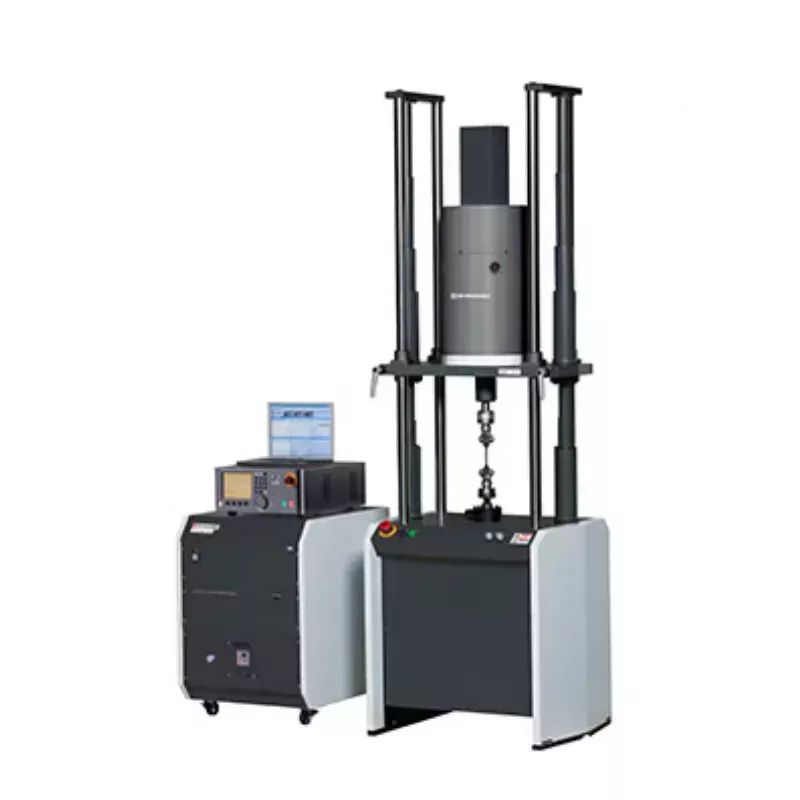
Electromagnetic dynamic testing machine, EMT
Shimadzu (Japan)
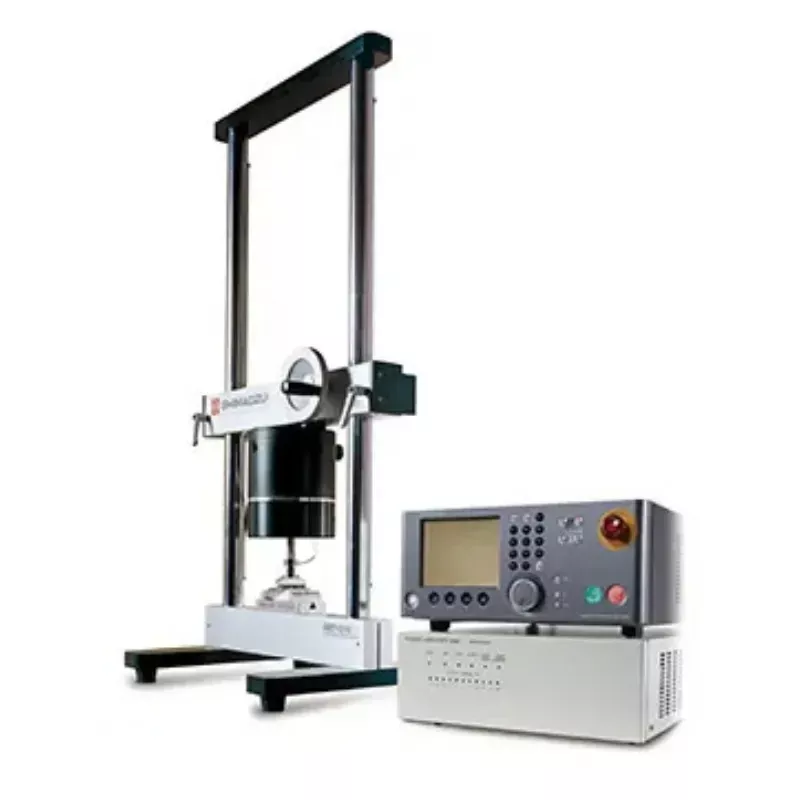
Electromagnetic micro testing machine, MMT
Shimadzu (Japan)

Electromechanical machine for dynamic and fatigue testing of shock absorbers, FAT – SHOCK ABSORBER
Easydur (Italy)
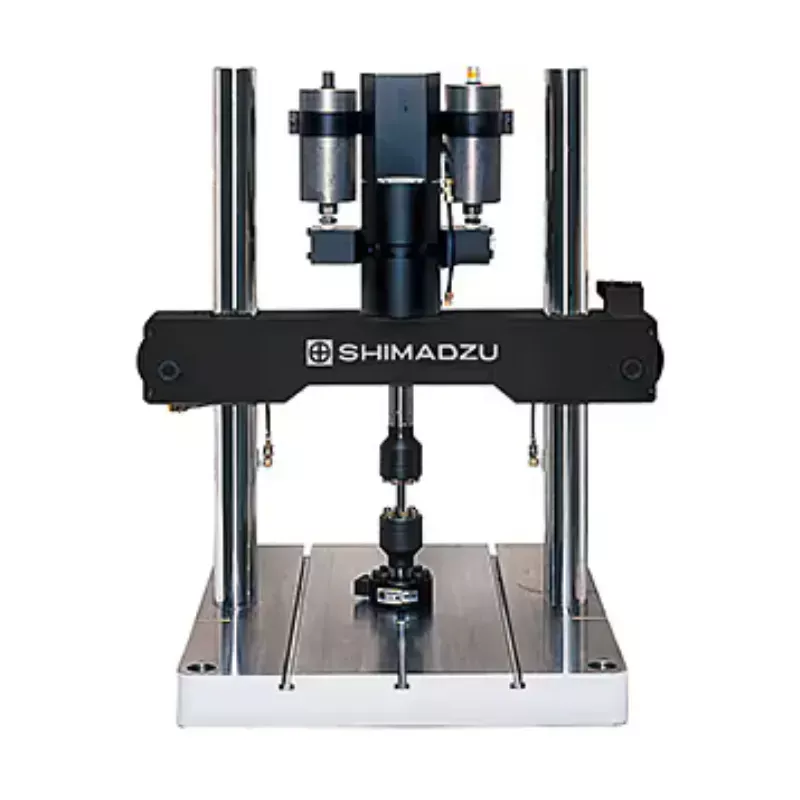
Overhead-actuator servo-hydraulic fatigue testing machine, EHF-U
Shimadzu (Japan)
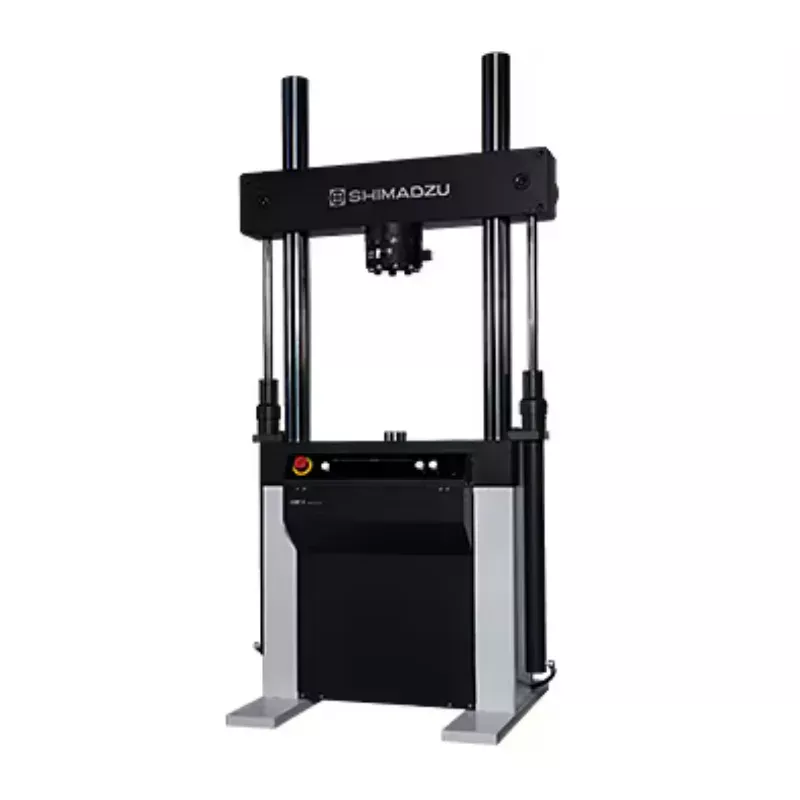
Servo-hydraulic fatigue testing machine, EHF-E
Shimadzu (Japan)
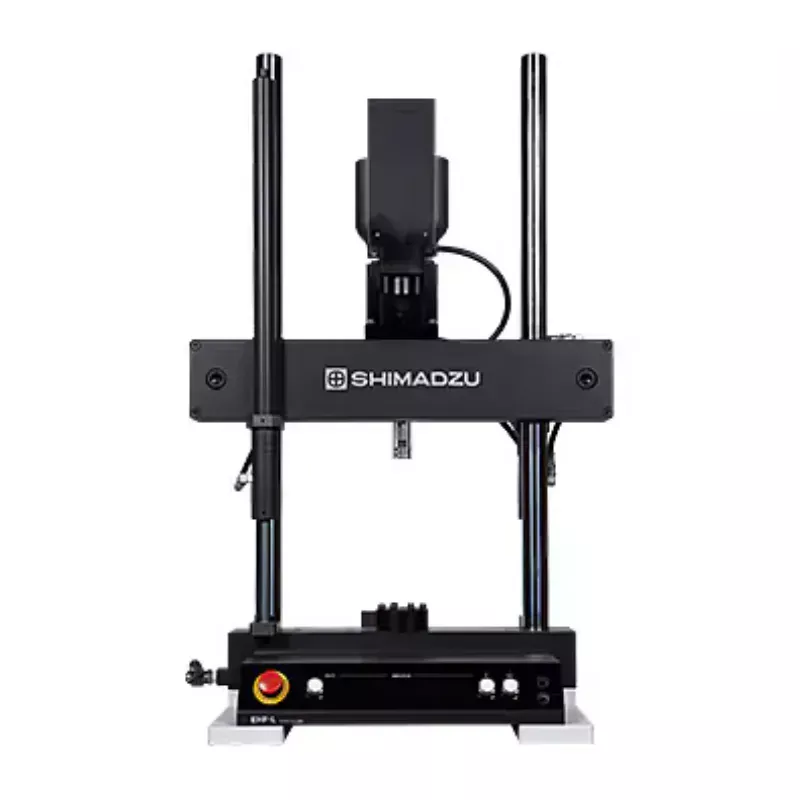
Table-top servo-hydraulic fatigue testing machine, EHF-L
Shimadzu (Japan)
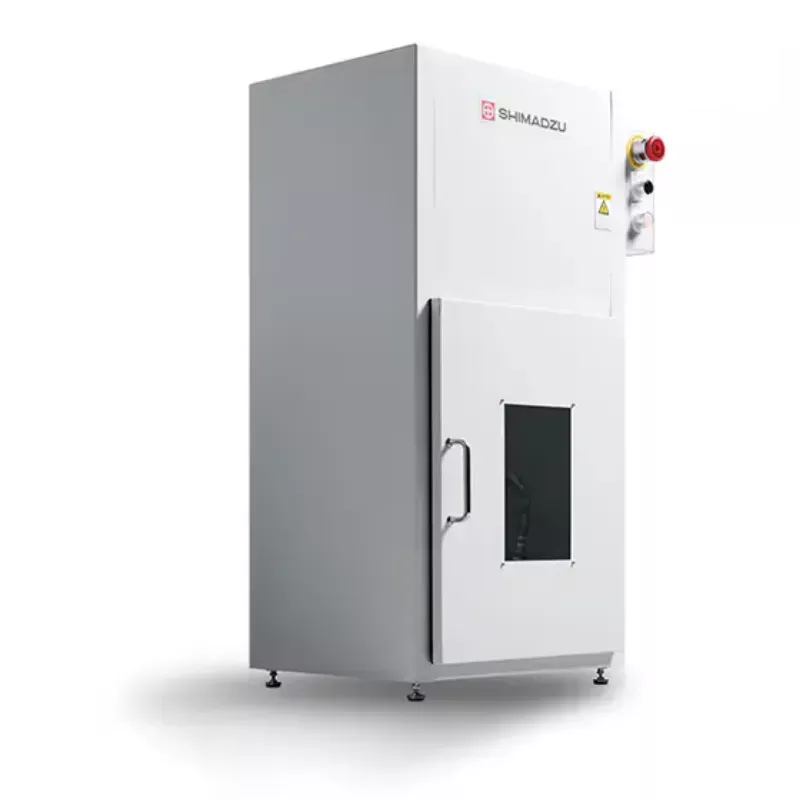
Ultrasonic fatigue testing system, USF-2000A
Shimadzu (Japan)
What Is Fatigue and Dynamic Load Testing Equipment?
Fatigue and dynamic load testing equipment includes specialized testing machines and measurement systems designed to investigate the mechanical behavior of materials and components under variable, repeated, or cyclic loads. These systems are used to evaluate fatigue life, resistance to cyclic failure, changes in stiffness, deformation characteristics, and component behavior under conditions representative of service loading.
Unlike static tests, in which loading is applied according to a defined procedure without extensive repetition of operating cycles, fatigue testing involves repeated variations in force, stress, or strain. Damage may accumulate even at load levels below the static strength of a material and eventually lead to crack initiation, crack propagation, and failure.
Dynamic and fatigue testing systems are used in mechanical engineering, metallurgy, automotive, aerospace and railway industries, materials science, and scientific research laboratories. Depending on machine specifications, they can investigate metals, alloys, polymers, composites, springs, shock absorbers, structural components, and other products.
Operating Principle and Key Fatigue Testing Parameters
Fatigue testing involves repeatedly applying a controlled load to a specimen according to a defined force, displacement, or strain waveform. The testing machine generates the required loading cycle, records measurement signals, and monitors execution of the test program.
Key fatigue and dynamic testing parameters include:
- Load amplitude — the magnitude of cyclic variation in force, stress, displacement, or strain.
- Mean load — the average force or stress level during a cycle, which can influence fatigue damage conditions.
- Stress ratio (R) — the ratio of minimum to maximum stress, used to describe the relationship between load extremes during a cycle.
- Test frequency — the number of loading cycles per unit of time, commonly expressed in hertz (Hz).
- Cycles to failure — a measure of specimen fatigue life under defined conditions. If failure does not occur before the specified cycle limit, the result is reported according to the test procedure.
- Loading waveform — the variation of a controlled parameter over time. Depending on the system, sine, triangular, rectangular, and other programmable waveforms may be available.
For material fatigue characterization, a series of tests can be used to construct S–N curves (Wöhler curves), which represent the relationship between stress level and the number of cycles to failure. Low-cycle fatigue investigations may use strain-controlled procedures and ε–N relationships. These results support material comparisons and studies of heat treatment, surface conditions, and specimen geometry.
Types of Dynamic and Fatigue Testing Machines
Testing systems differ in actuation technology, force range, speed, frequency, and available testing space. Several main instrument types are used in laboratory and industrial applications.
- Electromagnetic testing machines — use controlled electromagnetic forces to generate repeated movements and loads. These systems support high-speed dynamic testing without hydraulic actuation and are suitable for materials and components within their rated force and frequency ranges.
- Electromagnetic micro-testing systems — designed for small specimens, miniature components, and materials tested under relatively low loads. With suitable fixtures, they may be used for fatigue research on thin materials, electronic components, and selected biomaterials.
- Servo-hydraulic testing machines — generate controlled loads using hydraulic actuators and servo control. They are used for static, dynamic, and fatigue testing over a broad range of forces. Configurations include compact tabletop systems, conventional load frames, and overhead-actuator machines for large specimens and assemblies.
- Electromechanical dynamic test stands — employ electric motors, linear actuators, or related mechanisms to generate repeated loads. These systems are particularly useful for testing springs, dampers, shock absorbers, and other manufactured components.
- Ultrasonic fatigue testing systems — employ resonant mechanical oscillations at very high frequencies, including approximately 20 kHz. They enable accelerated investigations in the Very High Cycle Fatigue (VHCF) regime. Appropriate specimen geometry and control of resonance conditions and temperature are required.
Each actuation technology has its own force, amplitude, and frequency limitations. Electromagnetic, servo-hydraulic, and ultrasonic machines are therefore not fully interchangeable; selection depends on the required testing procedure and operating conditions.
Applications of Fatigue Testing Equipment
Fatigue and dynamic testing systems are used to investigate material durability, verify component performance, and characterize behavior under repeated mechanical loading.
- Metallurgy and materials science — investigation of metal and alloy fatigue strength and the influence of microstructure, heat treatment, surface condition, and manufacturing processes on fatigue life.
- Mechanical engineering — testing shafts, fasteners, joints, machine parts, and structural components exposed to repeated loads.
- Automotive industry — evaluation of shock absorbers, springs, elastomeric mounts, suspension components, and other parts under cyclic loads.
- Aerospace industry — fatigue research on structural materials, joints, and critical components.
- Railway transportation — dynamic testing of suspension springs, dampers, and other rolling stock assemblies.
- Scientific research laboratories — generation of fatigue curves, investigation of damage evolution, material comparisons, and evaluation of new structural solutions.
Standardized force-controlled fatigue methods for metallic specimens include ISO 1099 and ASTM E466. However, procedures for polymers, full-size components, low-cycle fatigue, and ultrasonic fatigue testing have their own requirements for specimen geometry, load control, and data acquisition. High-frequency test results must be interpreted with consideration of possible frequency effects, specimen self-heating, and loading conditions.
How to Choose Dynamic and Fatigue Testing Equipment
Equipment selection should begin with identifying the material or component, loading conditions, minimum and maximum test forces, required displacement amplitude, frequency range, and expected number of cycles. Material specimen testing may require force or strain control, while testing finished components may involve specialized motion and loading profiles.
Important considerations include actuation technology, load frame stiffness, testing space, grips, force and displacement sensors, extensometer compatibility, and other measuring devices. For tests at different temperatures or in aggressive environments, compatibility with thermal chambers, corrosion baths, and additional equipment may be necessary.
Testing software may provide programmable loading cycles, amplitude and frequency control, cycle counting, test termination criteria, diagram generation, and data storage. For long-duration fatigue studies, automatic stopping under predefined conditions, system status monitoring, and operational safety are particularly important.
A properly selected fatigue and dynamic load testing system provides reproducible information about the mechanical behavior of materials and components, supports investigation of fatigue life, and helps evaluate performance under repeated loading conditions.