
Thermomechanical Analyzers
Analyzers for studying deformation properties of materials under the influence of temperature and mechanical load.
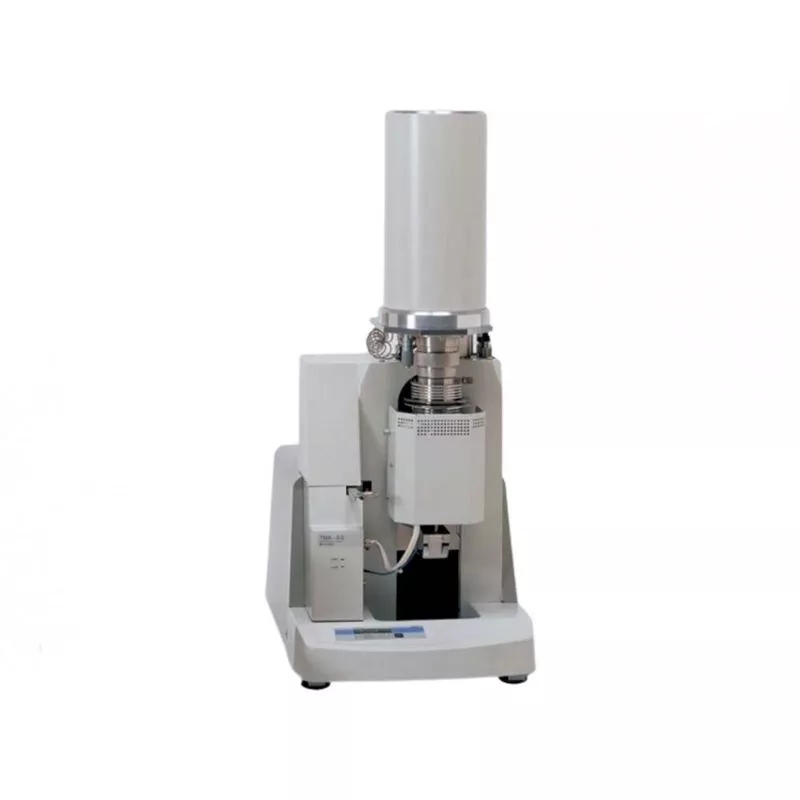
What Are Thermomechanical Analyzers?
Thermomechanical Analyzers (TMA) are laboratory instruments used to investigate changes in material dimensions and deformation behavior as a function of temperature, time, and applied mechanical load. Thermomechanical analysis is used to determine the coefficient of linear thermal expansion, investigate shrinkage, softening, thermal transitions, and other properties related to dimensional changes during heating or cooling.
Thermomechanical analyzers are used in materials science, polymer and chemical manufacturing, electronics, metallurgy, ceramics, glass production, composites, and research laboratories. They support the evaluation of dimensional stability, temperature-dependent material behavior, and properties relevant to product development and manufacturing process control.
Unlike Differential Scanning Calorimetry (DSC), which records thermal effects, and Thermogravimetry (TG), which measures mass changes, TMA directly records probe displacement associated with sample expansion, contraction, or deformation. These techniques therefore provide complementary information for comprehensive thermal characterization.
Operating Principle of Thermomechanical Analysis
Thermomechanical analysis measures dimensional changes during a controlled temperature program under a specified mechanical force. A specimen is placed inside a measuring furnace in contact with a probe or suitable fixture. During heating, cooling, or isothermal holding, the instrument records displacement caused by thermal expansion, shrinkage, or mechanical deformation.
High-sensitivity displacement sensors detect small changes in specimen dimensions. Results are presented as a TMA curve, showing displacement or relative strain as a function of temperature or time.
A typical measurement procedure includes:
- Specimen preparation — preparing the required geometry, measuring initial dimensions, and cleaning contact surfaces.
- Specimen installation — positioning the sample in the measurement cell and selecting the appropriate probe or tension fixture.
- Load adjustment — applying the force required for stable probe contact or controlled deformation testing.
- Temperature programming — specifying heating, cooling, or isothermal conditions.
- Displacement measurement — continuously recording dimensional changes during the experiment.
- Data evaluation — generating thermomechanical curves, identifying characteristic temperatures, and calculating expansion or deformation parameters.
Results depend on sample geometry, uniformity, applied load, heating rate, gas atmosphere, and the thermal behavior of measurement system components. Consistent testing conditions are essential for reliable material comparisons.
Coefficient of Thermal Expansion (CTE) Measurement
A principal application of TMA is the determination of the Coefficient of Linear Thermal Expansion (CTE). This parameter describes the relative change in material length caused by a temperature change and is commonly expressed in K⁻¹ or µm/(m·K).
Most materials expand during heating, but expansion depends on composition, structure, measurement direction, and temperature range. Certain materials exhibit very low or even negative thermal expansion coefficients over specific temperature intervals.
The mean coefficient of linear thermal expansion is calculated from the initial specimen length, measured length change, and corresponding temperature interval. Materials with nonlinear expansion behavior may require separate CTE values over different temperature ranges.
CTE is especially important in components combining materials with different expansion properties. For example, differences between metals, ceramics, and polymers may generate thermal stresses during heating or cooling. Such measurements support the assessment of material compatibility in electronic components, adhesive joints, composites, and structures exposed to temperature fluctuations.
Differential thermomechanical systems may be used to investigate low-expansion materials by comparing the specimen displacement with a reference material of known expansion properties. This approach helps compensate for thermal displacement in the measurement system and improves the evaluation of small dimensional changes.
Measurement Modes: Expansion, Tension, and Penetration
Depending on instrument design and accessories, thermomechanical analyzers may support several mechanical measurement configurations.
- Expansion and compression — used to measure dimensional changes of solid specimens during heating or cooling, allowing determination of thermal expansion coefficients and characteristic dimensional transitions.
- Tension — used for films, fibers, and suitable thin specimens. The instrument measures length changes under specified loading and temperature conditions, providing information about thermal shrinkage, elongation, and deformation behavior.
- Penetration — uses a probe pressed against the specimen under a specified force. As the material is heated, changes in probe penetration can reveal softening behavior and enable determination of penetration temperature using the relevant procedure.
- Programmed loading — depending on configuration, instruments may support changing forces, controlled deformation rates, or cyclic loading programs for selected films, fibers, and other suitable materials.
One application of tension-mode TMA is the investigation of lithium-ion battery separator films. Heating may cause dimensional shrinkage or elongation, and the resulting TMA curve can be used to identify the temperature interval and extent of dimensional change.
Thermomechanical analysis can also identify changes in polymer behavior near the glass transition temperature (Tg). These may appear as changes in thermal expansion slope or deformation response under load. Appropriate evaluation procedures are required to assign glass transition and penetration temperatures.
Although certain TMA instruments support cyclic loading, thermomechanical analysis should not automatically be considered equivalent to Dynamic Mechanical Analysis (DMA). Direct measurement of storage modulus, loss modulus, and mechanical loss factor generally requires dedicated DMA equipment.
Shimadzu TMA-60 and TMA-60H Thermomechanical Analyzers
The Shimadzu TMA-60 and TMA-60H are laboratory thermomechanical analyzers designed to investigate dimensional changes and deformation behavior under controlled temperature conditions.
Both instruments feature high-precision digital displacement measurement over a range of ±5 mm and support specimen loading within ±5 N. The series combines programmable heating, temperature control, and software-based recording and evaluation of thermomechanical curves.
The models differ in their primary measurement configurations:
- Shimadzu TMA-60 — a multifunctional analyzer using the total expansion measurement principle. It supports expansion, tension, and penetration with suitable fixtures. The upper temperature limit is 1000 °C for expansion measurement and 600 °C for tension and penetration in an inert atmosphere. With the optional LTB-60 low-temperature furnace, measurements from −150 to +600 °C are possible.
- Shimadzu TMA-60H — a high-temperature instrument for differential thermal expansion measurements. It operates from ambient temperature to 1500 °C and compares specimen displacement with a reference of known thermal expansion properties. This configuration is particularly suitable for ceramics, glass, metals, and materials with low coefficients of thermal expansion.
The TMA-60 uses a quartz measuring probe for expansion measurements, while the high-temperature TMA-60H uses an alumina (Al₂O₃) probe. Probe material, thermal stability, and reference selection are important considerations for accurate high-temperature measurements.
Both models provide automatic initial sample length measurement, digital displacement recording, and protective functions. For example, excessive specimen deformation or melting can trigger test interruption and load removal to reduce the risk of probe damage.
Compatible Shimadzu software, including LabSolutions TA, may provide curve analysis, automated processing templates, and reporting. Specific features depend on the installed software version and configuration.
Specimen Preparation and TMA Measurement Quality
Reliable thermomechanical measurements depend on specimen geometry, contact surface quality, applied force, and temperature conditions. During thermal expansion testing, the sample must be correctly aligned between the support and measuring probe to minimize tilting and unwanted mechanical displacement.
For the TMA-60, cylindrical specimens may be up to approximately 8 mm in diameter and 20 mm in length. Film specimens for tension testing may be up to 5 mm wide, 1 mm thick, and 20 mm long. The TMA-60H accommodates cylindrical specimens up to 5 mm in diameter and 20 mm in length. Actual specimen limitations depend on the measurement mode and installed fixtures.
Thermal expansion measurements require correction for instrument component expansion, accurate initial specimen length determination, and calibration using suitable reference materials.
For materials that soften during heating, probe force selection is especially important. Excessive loading may cause mechanical deformation in addition to thermal expansion, affecting the result. In penetration and tension measurements, such deformation is intentionally examined but must be interpreted according to the selected procedure.
Gas atmosphere can also influence material behavior. Measurements may be performed in air or a suitable inert environment, while specialized gas conditions and automatic gas switching require compatible accessories.
Standards for thermomechanical analysis of plastics include ISO 11359-1:2023 for general principles, ISO 11359-2:2021 for linear thermal expansion coefficient and glass transition temperature, and ISO 11359-3:2026 for thermoplastic penetration temperature. ASTM E831-25 also describes linear thermal expansion measurement of solid materials using TMA. The applicable procedure depends on specimen material, measurement objective, and available instrument capabilities.
Industrial Applications of Thermomechanical Analyzers
Thermomechanical analyzers are used wherever dimensional stability and temperature-dependent deformation are important material characteristics.
- Polymer manufacturing — measurement of thermal expansion, glass transition, softening, and shrinkage of plastics, elastomers, and polymer products.
- Composite manufacturing — investigation of thermal deformation of polymer matrices, reinforced materials, multilayer structures, and bonded assemblies.
- Electronics — evaluation of thermal expansion of substrates, insulating materials, encapsulants, and material compatibility in electronic components.
- Battery manufacturing — investigation of thermal shrinkage of polymer separator films and other suitable film materials.
- Ceramics — high-temperature thermal expansion analysis of ceramic components, refractories, and technical ceramics.
- Glass manufacturing — examination of thermal expansion, thermomechanical transitions, and compatibility between glass and other materials.
- Metallurgy and mechanical engineering — analysis of temperature-dependent dimensional changes in metals, alloys, structural components, and low-expansion materials.
- Research laboratories — comparison of new materials, investigation of thermomechanical behavior, and development of dimensional stability testing procedures.
Thermomechanical analysis characterizes dimensional changes and specimen deformation under defined conditions, but it does not directly determine chemical composition, ultimate tensile strength, or the complete range of dynamic mechanical properties.
How to Choose a Thermomechanical Analyzer
Instrument selection should begin with material type, expected temperature range, required measurement modes, specimen dimensions, and the magnitude of dimensional changes under investigation.
For laboratories routinely testing polymer films, fibers, plastics, and composites, a multifunctional instrument such as the Shimadzu TMA-60 may be appropriate. Switching between expansion, tension, and penetration enables several research tasks to be performed using one system.
Where high-temperature thermal expansion of glass, ceramics, metals, or low-CTE materials is the main objective, differential expansion systems such as the Shimadzu TMA-60H, operating up to 1500 °C, may be more suitable.
Low-temperature testing requires evaluation of the available cooling system. For materials prone to softening, the applied force and fixture design are critical. High-temperature measurements also require consideration of probe material, system thermal stability, and permitted atmospheres.
Other selection criteria include displacement range and resolution, loading programs, software functions, calibration requirements, interchangeable fixtures, and operating conditions. A properly selected thermomechanical analyzer provides reproducible measurements of thermal expansion and deformation behavior for laboratory quality control and materials research.