
Spring Testing Equipment
Instruments and machines for determining spring characteristics such as force, stiffness, cyclic durability, and deformation.
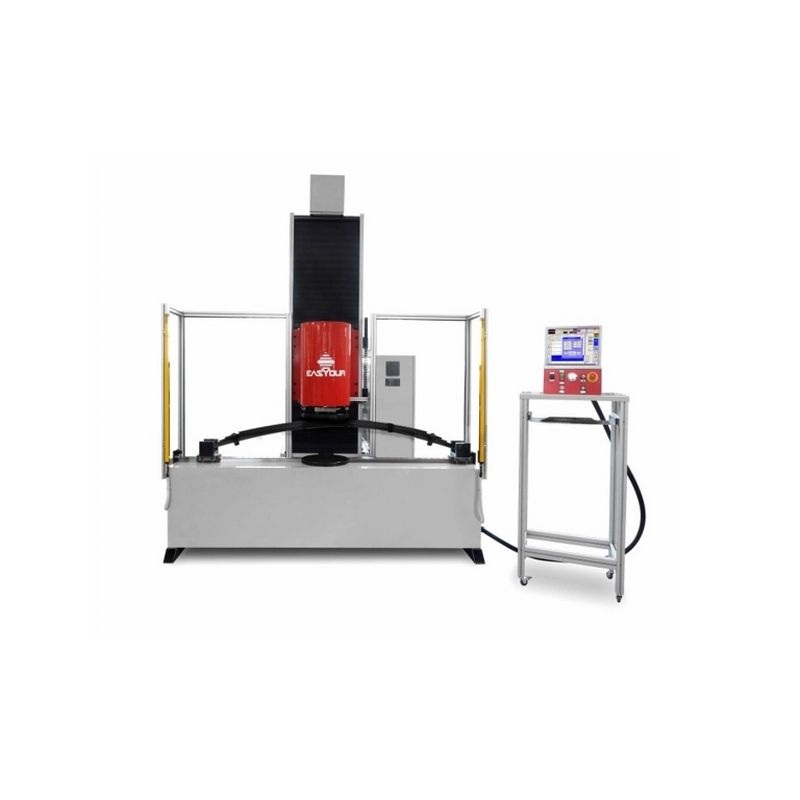
A machine for testing leaf springs, AURA ARCO
Easydur (Italy)
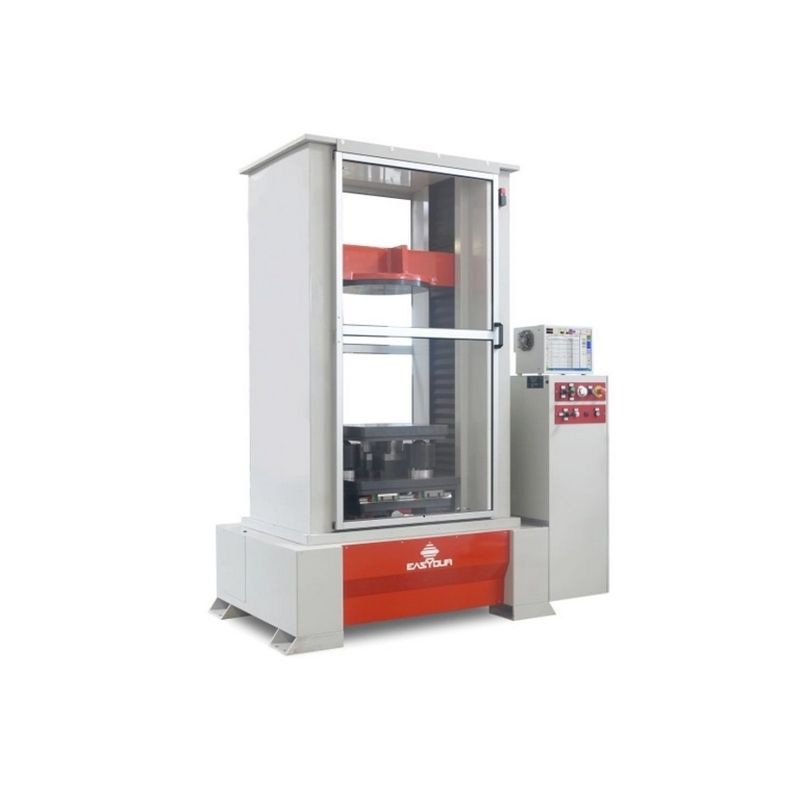
AURA DYNAMIC spring compression/tension dynamic tests
Easydur (Italy)
.png)
Device for testing springs with manual control, DOMO (1-500 N)
Easydur (Italy)
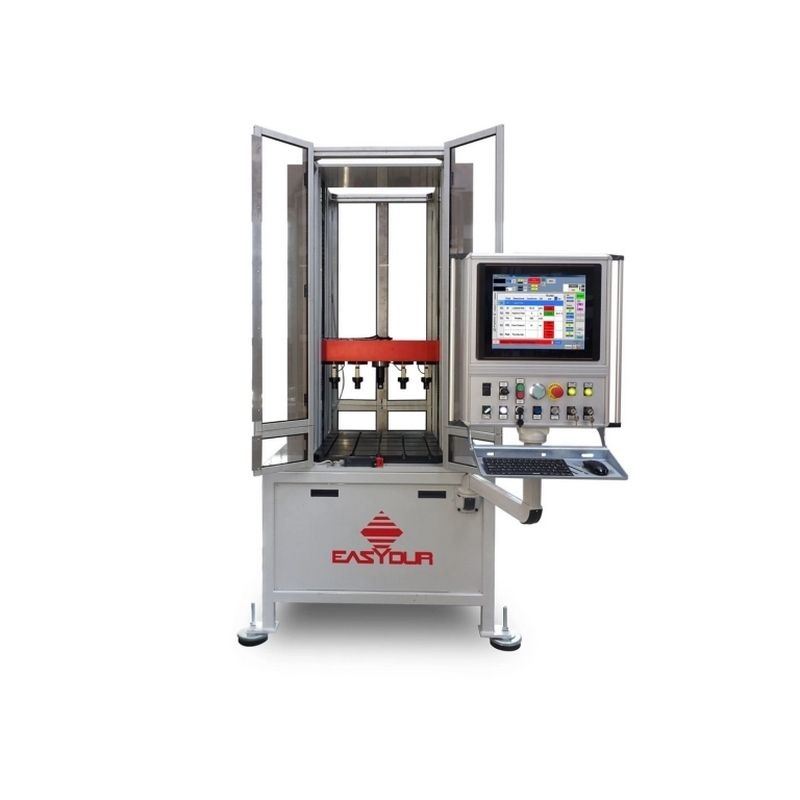
DYNAMICS dynamic testing machine
Easydur (Italy)
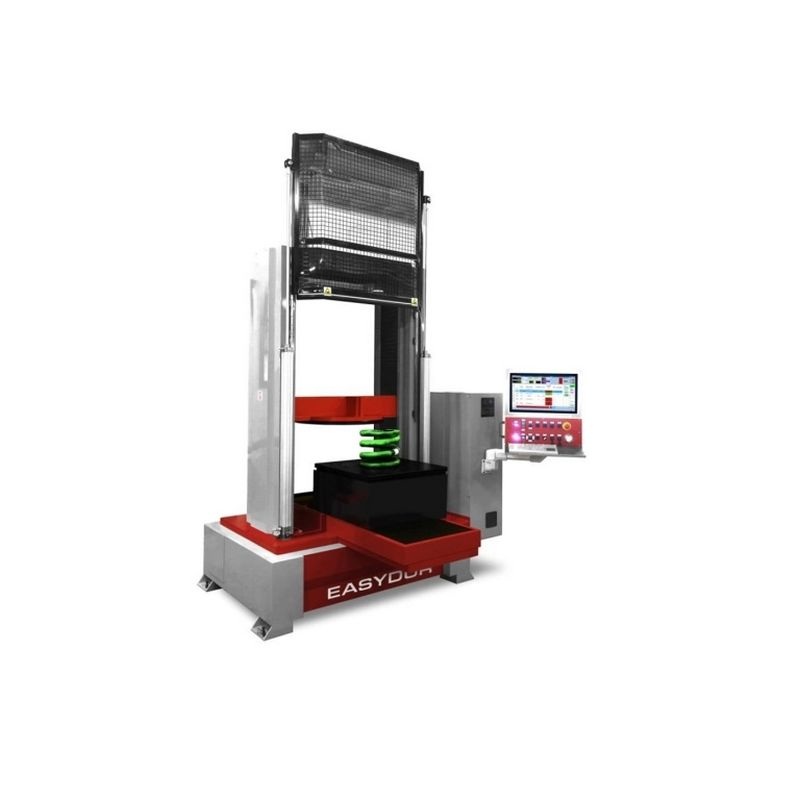
Electromechanical machine for compression tests of railway springs, AURA CHASSE
Easydur (Italy)
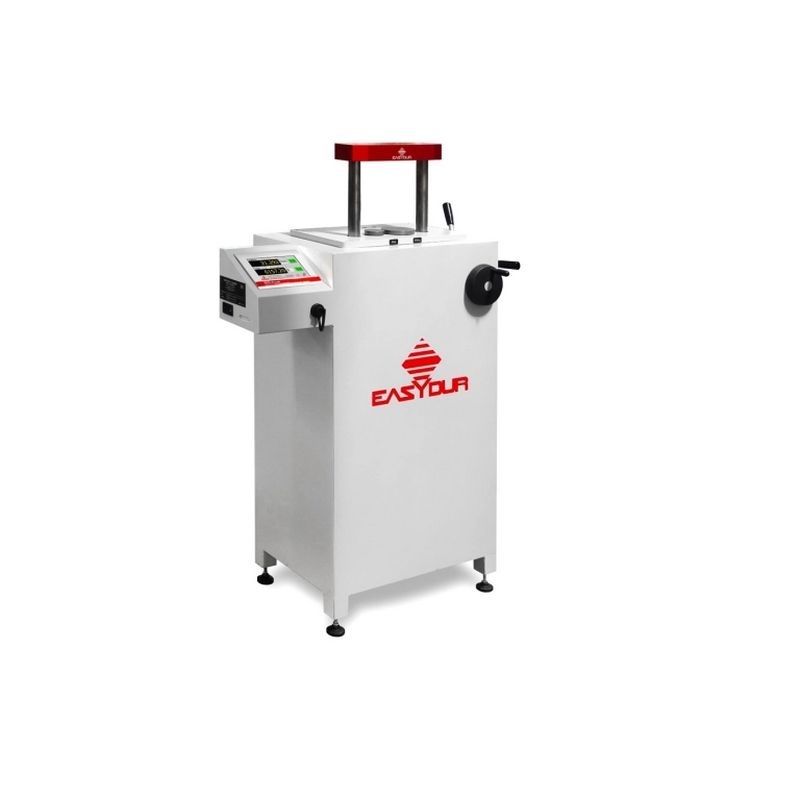
Manual spring testing machine, 2C PLUS
Easydur (Italy)
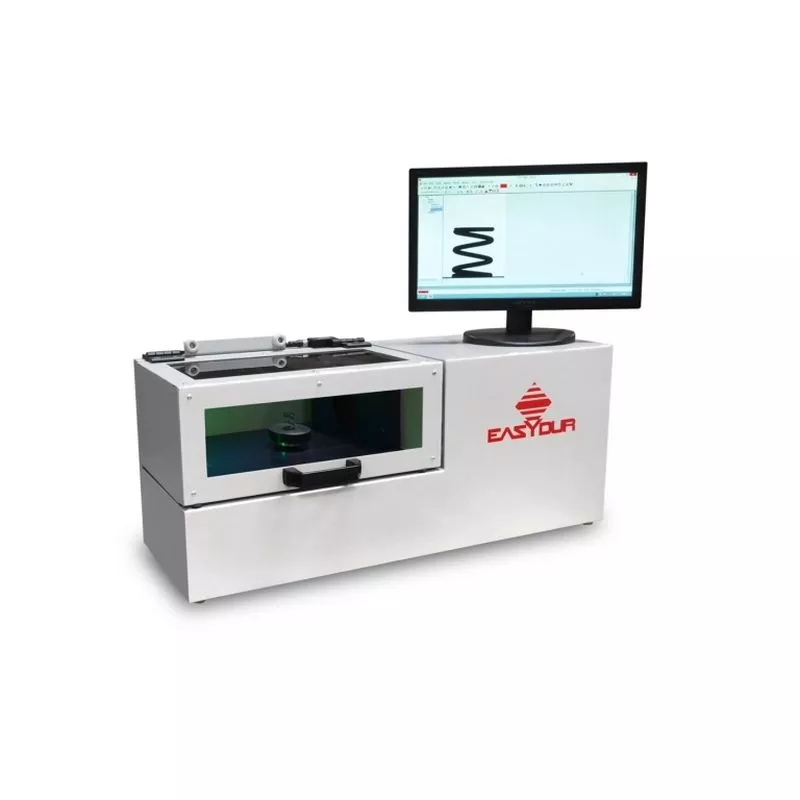
Optical measuring system, E1-E2
Easydur (Italy)
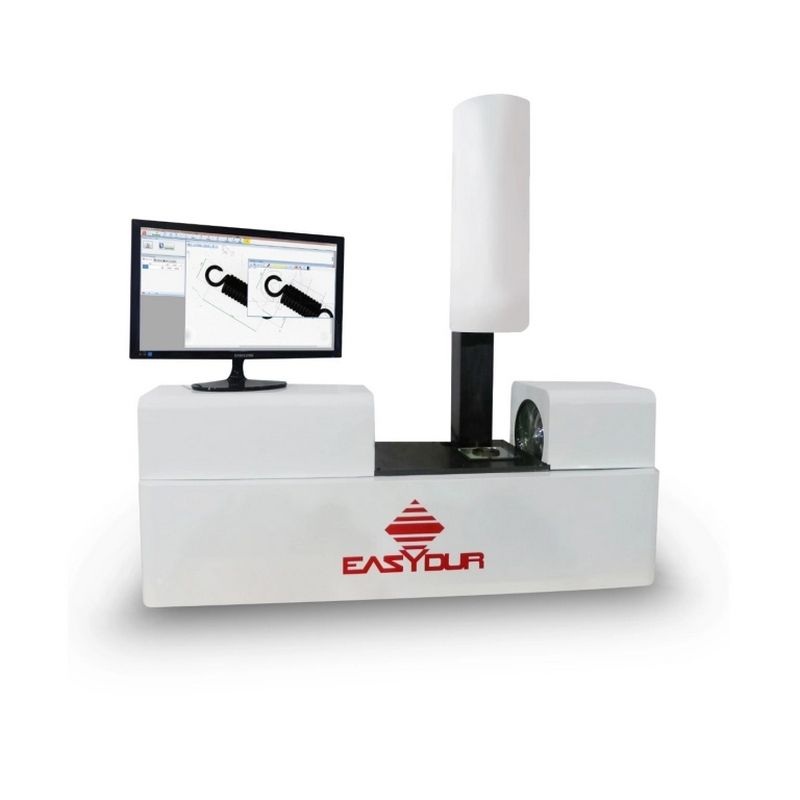
Optical measuring system, MULTIVISION II - 110
Easydur (Italy)
Optical measuring system, MULTIVISION II - 200
Easydur (Italy)
Optical measuring system, MULTIVISION II - 25
Easydur (Italy)
Optical measuring system, MULTIVISION II - 64
Easydur (Italy)
What Is Spring Testing Equipment?
Spring testing equipment includes specialized testing machines and measurement systems designed to determine the mechanical and dimensional characteristics of elastic components. Such equipment is used to measure compression and tension forces, stiffness, deformation, working length, stability under repeated loading, and compliance of spring geometry with specified requirements.
Spring testing is performed during manufacturing, acceptance inspection, finished product quality control, and scientific research. Depending on equipment design, helical compression and extension springs, conical springs, disc springs, and other elastic components can be examined. Comprehensive quality control may employ manual measuring instruments, automated testing machines, dynamic test stands, and optical dimensional measurement systems.
Static Compression and Tension Testing of Springs
Static testing is used to determine the relationship between applied force and the change in spring length. During testing, a spring is compressed or extended to a specified position or load, and the system measures the corresponding force and displacement.
The main characteristics that may be determined include:
- Spring force — the load generated at a specified length or deformation.
- Spring rate or stiffness — the ratio of a change in force to the corresponding change in displacement over a selected section of the force-displacement characteristic. In nonlinear springs, stiffness may vary with deformation.
- Free and working length — spring dimensions without applied load and under a specified force.
- Force-displacement curve — a representation of mechanical spring behavior during loading and unloading.
- Permanent deformation — changes in spring length or shape after a specified loading cycle, when required by the testing procedure.
Manually operated instruments with electronic force and displacement sensors are used for small batches and laboratory measurements. Automated systems provide programmable loading sequences, controlled displacement speeds, curve generation, and data storage. Correct spring alignment, suitable support surfaces, preload conditions, and compliance with the established procedure are important for reliable measurements.
Dynamic Testing and Evaluation of Spring Behavior
Dynamic testing investigates spring behavior under variable and repeated mechanical loads. Unlike static measurements, these tests evaluate the characteristics of elastic elements during cyclic compression, extension, or other mechanical actions supported by the testing system.
Test parameters may include force or displacement amplitude, frequency, loading speed, number of cycles, and changes in mechanical properties during the test. Depending on the procedure, hysteresis, permanent deformation, changes in stiffness, and spring behavior after repeated loading may be examined.
Dynamic testing systems are used to investigate suspension springs, mechanical components, and other elastic elements exposed to repeated operating loads. However, the ability to perform full fatigue-to-failure testing depends on the machine specifications, permissible frequency, test duration, and supported loading program.
Optical Dimensional Inspection of Springs
In addition to mechanical characteristics, dimensional verification plays an important role in spring quality control. Specialized optical measurement systems are used to determine spring dimensions and shape without applying mechanical test loads.
Depending on system design, measurements may include outside diameter, height, coil pitch, number of coils, end-face perpendicularity, parallelism, concentricity, and deviations in geometric shape. Systems offering multiple observation directions and specialized software can provide three-dimensional spring geometry analysis.
Optical measurements are particularly useful in serial manufacturing, where dimensional deviations must be detected quickly and components must be checked against engineering drawings. However, dimensional inspection does not replace measurements of force, stiffness, and deformation. These methods complement one another in comprehensive spring quality assessment.
Applications and Selection of Spring Testing Equipment
Spring testing equipment is used by spring manufacturers, mechanical engineering companies, automotive and railway industries, precision mechanism manufacturers, and quality control laboratories. Testing helps verify elastic component specifications, assess manufacturing process stability, and investigate behavior under operating loads.
When selecting a spring testing machine, important considerations include spring type and geometry, minimum and maximum testing forces, displacement range, available testing space, and accuracy of force and position measurement. Automated machines additionally require consideration of displacement speed, load control modes, and data storage capabilities. For dynamic test stands, frequency range, amplitude, and permitted cyclic test duration must also be evaluated.
When dimensional inspection is the primary objective, key criteria include measurement range, optical system resolution, number of measured parameters, and inspection throughput. Properly selected spring testing equipment provides reproducible mechanical or dimensional measurements according to specified technical requirements and manufacturing objectives.