
Laboratory Equipment
Equipment for analytical, measurement, and research laboratories.
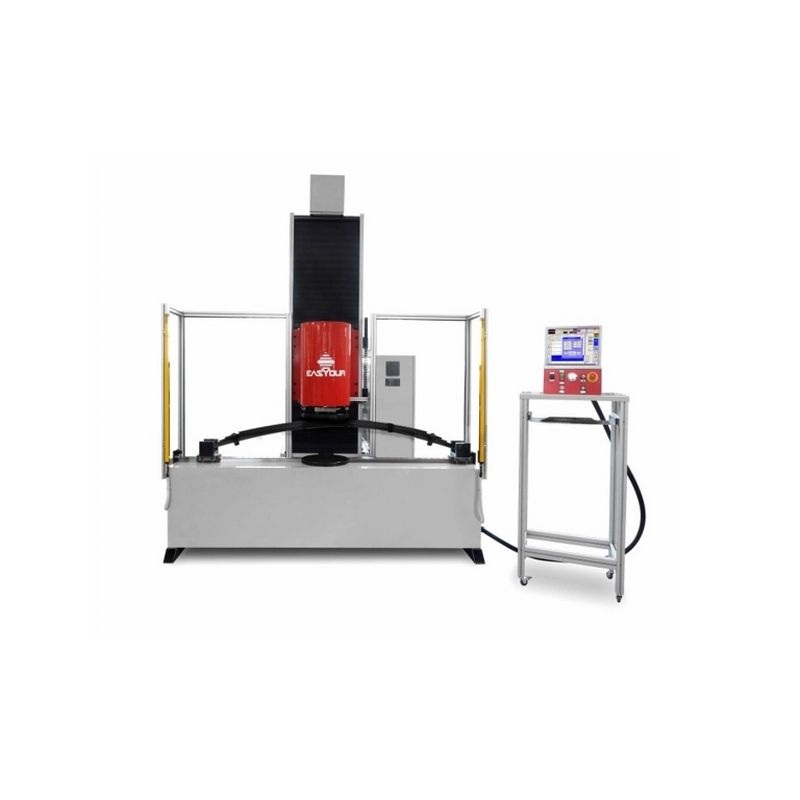
A machine for testing leaf springs, AURA ARCO
Easydur (Italy)
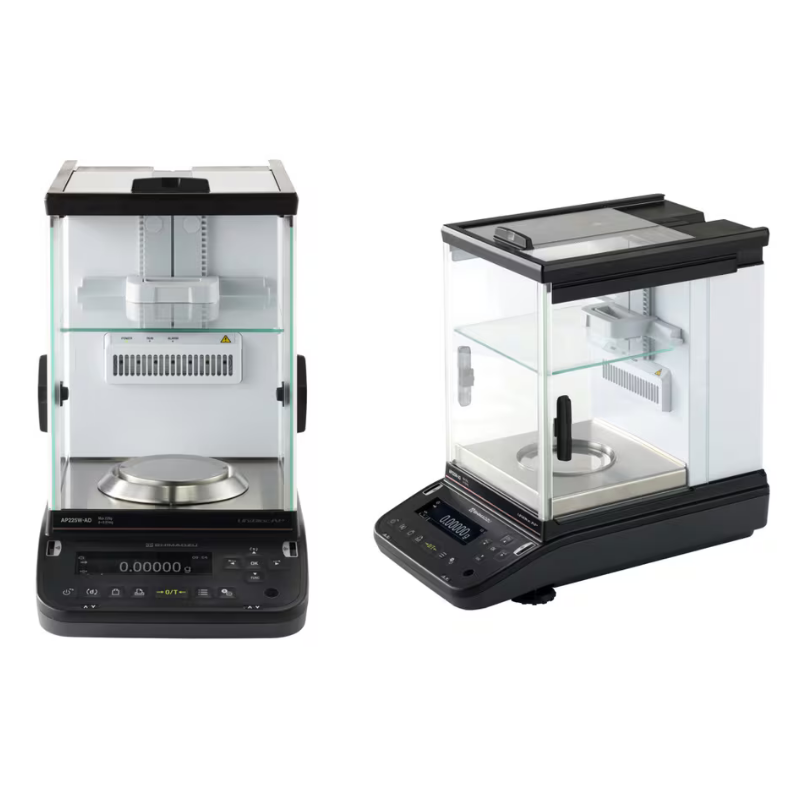
Analytical balances, AP124W
Shimadzu (Japan)
Analytical balances, AP124X
Shimadzu (Japan)
Analytical balances, AP124Y
Shimadzu (Japan)
Analytical balances, AP125WD
Shimadzu (Japan)
Analytical balances, AP125WD-AD
Shimadzu (Japan)
Analytical balances, AP135W
Shimadzu (Japan)
Analytical balances, AP135W-AD
Shimadzu (Japan)
Analytical balances, AP224W
Shimadzu (Japan)
Analytical balances, AP224W-AD
Shimadzu (Japan)
Analytical balances, AP224X
Shimadzu (Japan)
Analytical balances, AP224Y
Shimadzu (Japan)
Analytical balances, AP225W
Shimadzu (Japan)
Analytical balances, AP225W-AD
Shimadzu (Japan)
Analytical balances, AP225WD
Shimadzu (Japan)
Laboratory Equipment for Analysis, Research, and Quality Control
Laboratory equipment includes a broad range of analytical, measuring, and testing instruments designed to investigate the chemical composition, structure, physical properties, and mechanical behavior of materials. Modern laboratory systems are used for raw material and finished product quality control, conformity assessment, development of new materials, and scientific research.
Industrial and scientific laboratory equipment is used in metallurgy, mechanical engineering, chemical and pharmaceutical manufacturing, energy, electronics, biotechnology, food production, and many other industries. Depending on their purpose, instruments can determine elemental and molecular composition, examine material microstructures, measure hardness and strength, investigate thermal stability, separate complex mixtures, and characterize other material properties.
The catalog includes laboratory equipment for analytical, measurement, and research laboratories, including spectrometers, microscopes, chromatographs, elemental analyzers, materials testing machines, hardness testers, and thermal analyzers. The range includes equipment from Shimadzu, Zeiss, ATI, Easydur, NCS Testing Technology, and other specialized manufacturers.
Main Types of Laboratory Equipment
Laboratory equipment is classified according to measurement principles, specimen characteristics, and analytical applications. The catalog includes the following main categories:
- Optical Microscopy — upright, inverted, stereo, digital, and confocal microscopes, Super-Resolution systems, Light Sheet microscopy, and specialized imaging platforms. Used to examine microstructures, morphology, cells, tissues, surfaces, and microscopic specimens.
- Electron Microscopy — Scanning Electron Microscopes (SEM) and combined Focused Ion Beam-Scanning Electron Microscope systems (FIB-SEM). Used for micro- and nanoscale structural analysis, surface imaging, defect investigation, and localized specimen preparation. Elemental analysis requires compatible analytical accessories.
- Gas-Forming Impurity Analyzers for Metals — specialized instruments for determining oxygen, nitrogen, and hydrogen in metals and alloys. The range also includes carbon and sulfur analyzers using suitable high-temperature analytical methods.
- Organic Material Analyzers — instruments for determining the elemental composition of suitable organic materials, including carbon and sulfur content, for laboratory testing and raw material characterization.
- Analytical X-ray Equipment — Wavelength Dispersive and Energy Dispersive X-ray Fluorescence Spectrometers, microanalyzers, and X-ray Diffractometers. Used for elemental analysis, phase identification, crystal structure investigation, and localized material characterization.
- Other Analytical Equipment — biotechnology analyzers, Total Organic Carbon (TOC) analyzers, particle size analyzers, analytical balances, and moisture analyzers. Used for specialized measurements and sample characterization.
- Mass Spectrometry Equipment — MALDI-TOF Mass Spectrometers, Gas and Liquid Chromatography-Mass Spectrometry systems, and Inductively Coupled Plasma Mass Spectrometers (ICP-MS). Used for analyzing mass-to-charge characteristics of ions, compound identification, and sensitive elemental determination, depending on instrument type.
- Molecular Spectroscopy — Infrared (IR), Ultraviolet-Visible-Near-Infrared (UV-VIS-NIR), and fluorescence molecular spectrophotometers. Used to investigate absorption, transmission, fluorescence, and other molecular spectral characteristics.
- Mechanical Properties Testing Equipment — universal tensile and compression testing machines, torsion testing instruments, impact testing systems, spring testing equipment, and specialized installations. Used to determine strength, deformation, and other mechanical properties under applied loads.
- Atomic Spectroscopy Equipment — Atomic Absorption Spectrometers (AAS) and Inductively Coupled Plasma Optical Emission Spectrometers (ICP-OES). Used for qualitative and quantitative elemental analysis of various substances and materials.
- Hardness Testers — portable, universal, and specialized instruments for Vickers, Rockwell, Brinell, Shore, IRHD, and other hardness testing methods. Used for metals, alloys, polymers, rubber, coatings, and suitable industrial products.
- Thermal Analysis Equipment — Differential Scanning Calorimeters (DSC), Simultaneous Thermal Analyzers (TG-DTA), and Thermomechanical Analyzers (TMA). Used to investigate thermal effects, mass changes, phase transitions, decomposition, thermal expansion, and temperature-dependent deformation.
- Chromatographic Equipment — Gas Chromatographs (GC), Liquid Chromatographs (LC), HPLC/UHPLC systems, and related modules. Designed for separating components of complex mixtures, identifying compounds, and performing quantitative analysis using appropriate methods.
Equipment for Chemical Composition and Material Structure Analysis
Chemical and elemental composition analysis is an essential part of industrial quality control. X-ray fluorescence, atomic absorption, optical emission, and mass spectrometry systems are used for such studies, along with specialized carbon, sulfur, oxygen, nitrogen, and hydrogen analyzers.
X-ray Fluorescence Spectrometers (XRF) determine elemental composition from characteristic X-ray emission. X-ray Diffractometers (XRD) investigate crystal structures and phase composition and are therefore not direct substitutes for XRF systems. Atomic Absorption Spectrometry, ICP-OES, and ICP-MS use different physical principles and are selected according to target elements, concentration ranges, and sample properties.
Optical and electron microscopes are used for morphology and microstructure investigations. Optical microscopy supports examination of a wide range of microscopic specimens, while scanning electron microscopy provides detailed surface and fine-structure imaging. FIB-SEM systems additionally use an ion beam for localized specimen processing in specialized research applications.
Instrument selection depends on the specific characteristic to be measured: elemental composition, molecular properties, crystalline phases, microstructure, or surface morphology. Comprehensive material characterization may require several complementary techniques.
Laboratory Equipment for Mechanical Testing and Hardness Measurement
Mechanical testing evaluates material and product behavior under external loads. Universal testing machines, torsion systems, spring testers, and impact testing instruments can determine strength, deformation characteristics, and other mechanical properties using appropriate testing procedures.
Hardness testers are a separate group of material control instruments. Rockwell, Brinell, and Vickers methods are commonly used for metals and alloys, while Shore and IRHD methods may be used for rubber, polymers, and elastomers. Portable hardness testers support suitable measurements directly on industrial products, whereas benchtop and automated systems are used in laboratory and production environments.
Tensile strength, compression, impact resistance, and hardness measurements characterize different properties and are not fully interchangeable. The relevant standard, specimen geometry, applied load range, testing conditions, and required measurement accuracy must be considered.
Thermal Analysis of Materials
Thermal analysis instruments investigate physical and chemical processes occurring during heating, cooling, or isothermal holding.
Differential Scanning Calorimetry (DSC) is used to study melting, crystallization, glass transition, and other thermal events. Simultaneous TG-DTA combines sample mass change measurements with differential temperature analysis. Thermomechanical Analysis (TMA) measures thermal expansion, shrinkage, softening, and deformation under defined loading conditions.
These methods are used for polymers, metals, ceramics, glass, composites, pharmaceutical substances, and other materials. They are complementary because they describe different aspects of material behavior under changing temperatures.
Chromatography, Mass Spectrometry, and Molecular Spectroscopy
Chromatographic and spectroscopic methods are used to investigate complex chemical mixtures, determine impurities, and measure component concentrations.
Gas Chromatography (GC) is used for gas mixtures, volatile organic compounds, solvents, and other GC-compatible analytes. Liquid Chromatography (LC, HPLC, UHPLC) is suitable for a wide range of substances, including nonvolatile and thermally unstable compounds. Chromatographic separation may be combined with mass spectrometric detection for increased selectivity and additional identification information.
Molecular Spectroscopy examines interactions between electromagnetic radiation and matter. Depending on the technique, absorption, transmission, or fluorescence spectra may be measured to determine suitable analytes and investigate molecular properties.
Selection among chromatography, mass spectrometry, and spectroscopy depends on the analytical objective, sample composition, required selectivity, and concentration range. Complex investigations may combine several techniques.
Industrial Applications of Laboratory Equipment
Analytical instruments and laboratory testing systems are used in many industries for research, process control, and product quality verification.
- Metallurgy and Mechanical Engineering — chemical composition testing of metals and alloys, impurity analysis, microstructure investigation, strength testing, and hardness measurement.
- Chemical and Petrochemical Industries — examination of raw materials, reagents, solvents, synthesis products, gas mixtures, and process-related properties.
- Pharmaceutical Manufacturing — active ingredient determination, impurity analysis, thermal characterization, and testing of pharmaceutical materials.
- Polymer Manufacturing — evaluation of strength, hardness, thermal expansion, glass transition, melting, crystallization, and polymer stability.
- Electronics and Microelectronics — surface and microstructure investigation, thin-film analysis, electronic materials characterization, and thermomechanical compatibility studies.
- Food Industry — analysis of suitable components, additives, impurities, and properties of food ingredients and finished products.
- Biotechnology and Biomedical Research — investigation of cellular structures, biomolecules, and relevant laboratory specimens.
- Energy and Extractive Industries — testing of industrial materials, process gases, fuels, structural components, and product properties.
- Research and Testing Laboratories — development of analytical procedures, characterization of new materials, experimental specimen testing, and specialized laboratory measurements.
How to Choose Laboratory Equipment
Selecting laboratory equipment begins with defining the properties to be measured, sample types, measurement ranges, accuracy requirements, and laboratory throughput. Instruments intended for similar materials may use fundamentally different testing methods and provide different information.
Important selection criteria include:
- Application and Measurement Principle — suitability for the required analytical or testing task.
- Specimen Characteristics — physical state, composition, geometry, mass, dimensions, and preparation requirements.
- Metrological Performance — measurement range, resolution, accuracy, sensitivity, repeatability, and other method-specific characteristics.
- Standards and Methods — suitability for relevant ISO, ASTM, pharmacopoeial, or industry-specific testing procedures.
- Automation — autosamplers, programmable methods, automatic measurements, and data processing functions.
- Configuration — compatibility of detectors, sensors, testing fixtures, columns, indenters, and other components with the intended application.
- Operating Conditions — laboratory space, electrical supply, gases, ventilation, cooling, temperature stability, and vibration control.
- Service and Maintenance — calibration, technical support, consumables, personnel training, and repair options.
Instrument specifications, calibration, equipment qualification, and analytical method validation should be distinguished. Suitability for a particular application depends not only on instrument performance but also on its configuration, operating conditions, and use of appropriate procedures.
Laboratory Equipment in Ukraine: Selection, Supply, and Service
Equiset specializes in the supply, implementation, and service support of laboratory and metrology equipment. We help industrial companies, testing centers, and research laboratories select analytical and measurement systems according to their technical requirements.
Equipment selection considers specimen characteristics, analytical methods, required accuracy, laboratory throughput, installation conditions, and future needs. Depending on the application, laboratories may choose complete instruments or customized systems equipped with suitable modules, sensors, software, and accessories.
In addition to equipment supply, we provide installation, configuration, staff training, technical support, diagnostics, maintenance, and repair. These services help organizations implement laboratory systems according to their operating conditions and specific requirements.
To purchase laboratory equipment in Ukraine, discuss technical specifications, or equip a new or existing laboratory, contact the Equiset team. We can help define the required configuration, compare suitable solutions, and prepare a proposal for your research or industrial applications.