
Chromatographic Equipment
Equipment for separation, identification, and quantitative analysis of complex mixtures using gas or liquid chromatography methods.
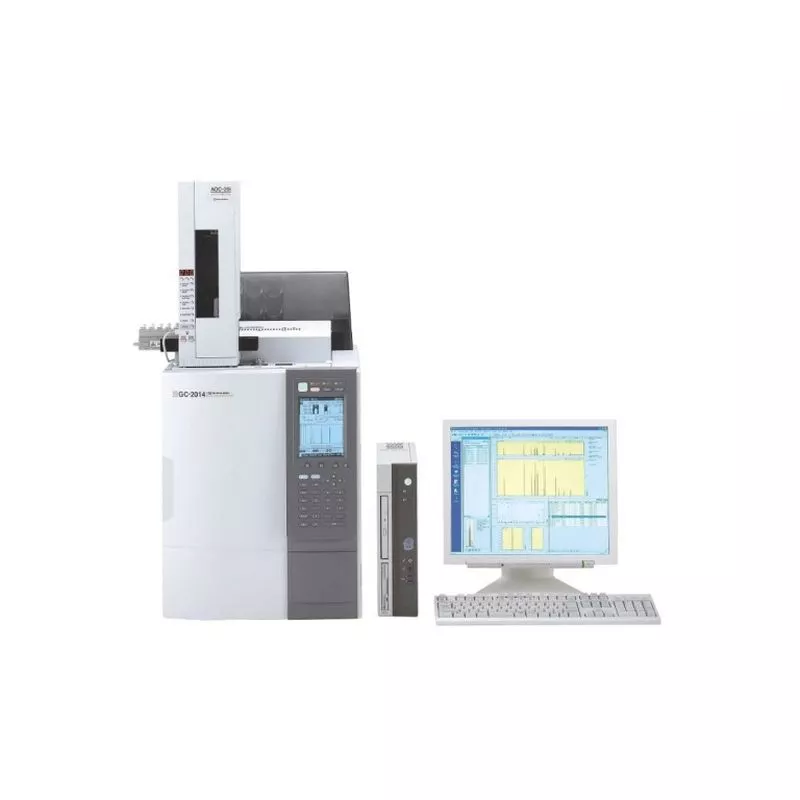
Gas chromatograph, GC-2014
Shimadzu (Japan)
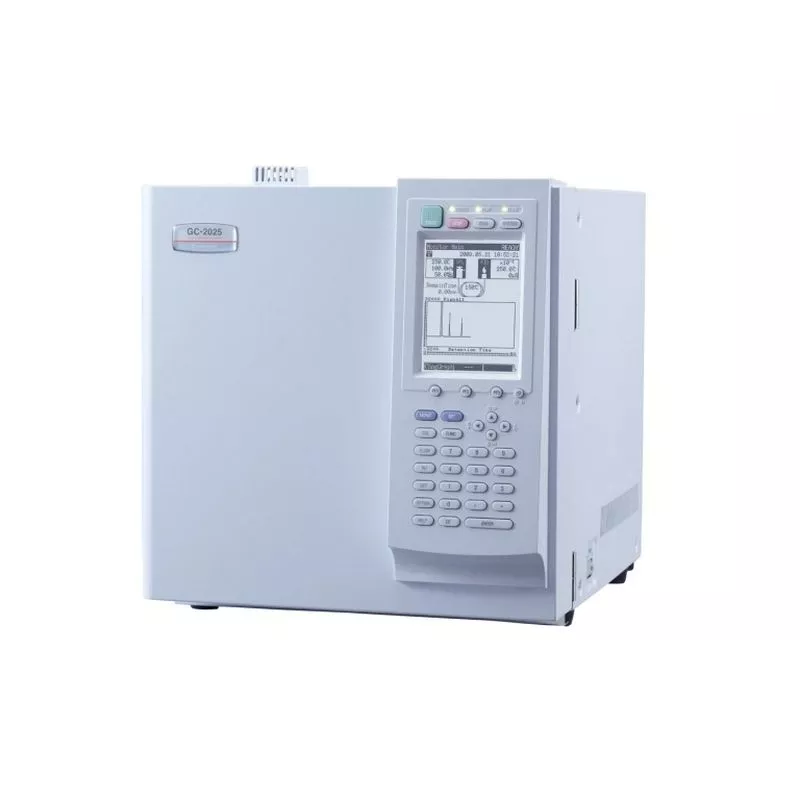
Gas chromatograph, GC-2025
Shimadzu (Japan)
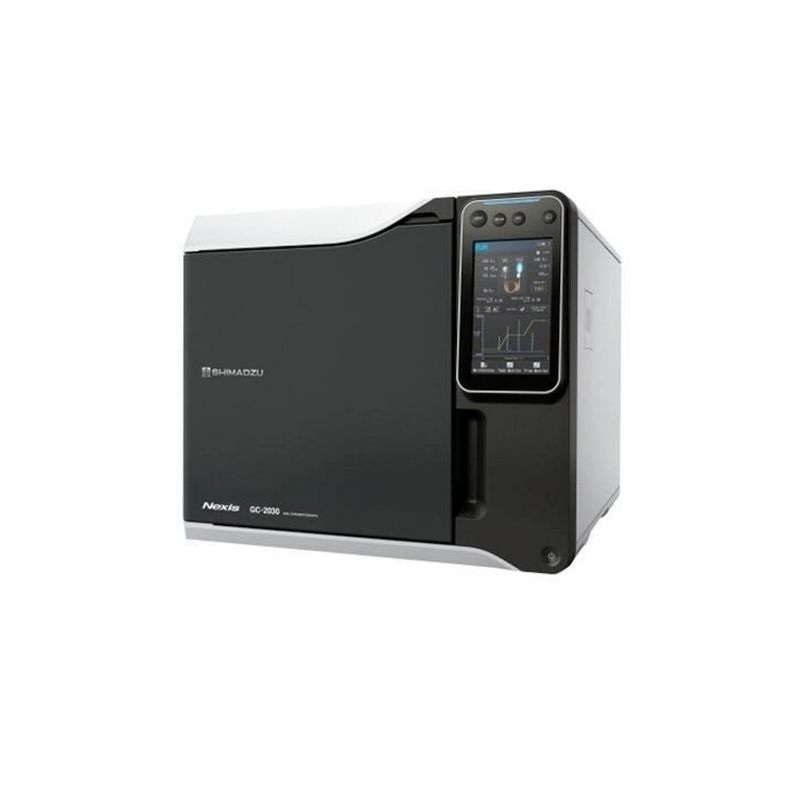
Gas chromatograph, Nexis GC-2030
Shimadzu (Japan)
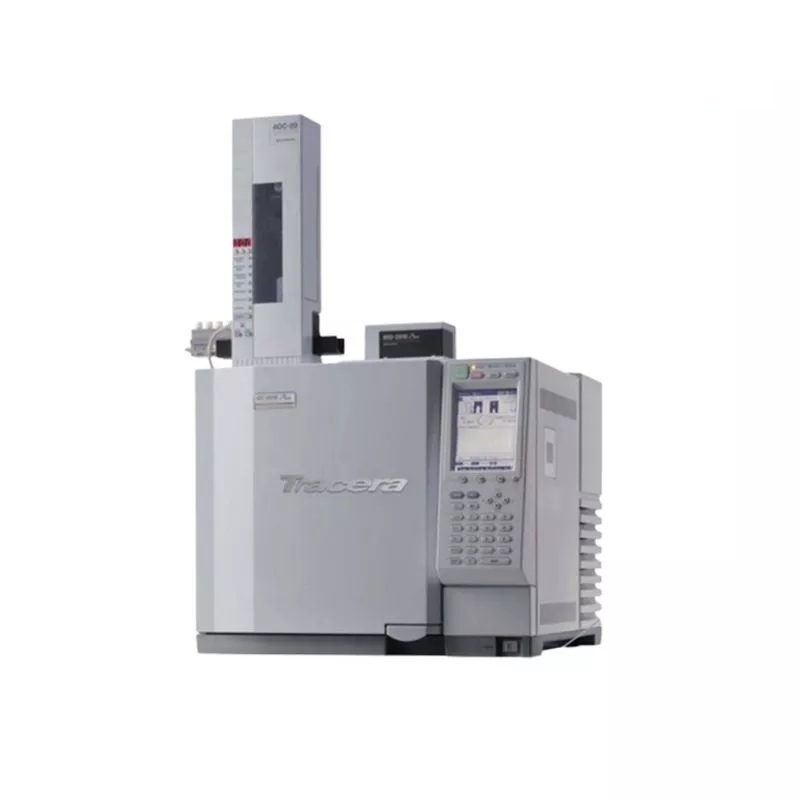
Gas chromatograph, TRACERA GC-2010PLUS-BID
Shimadzu (Japan)
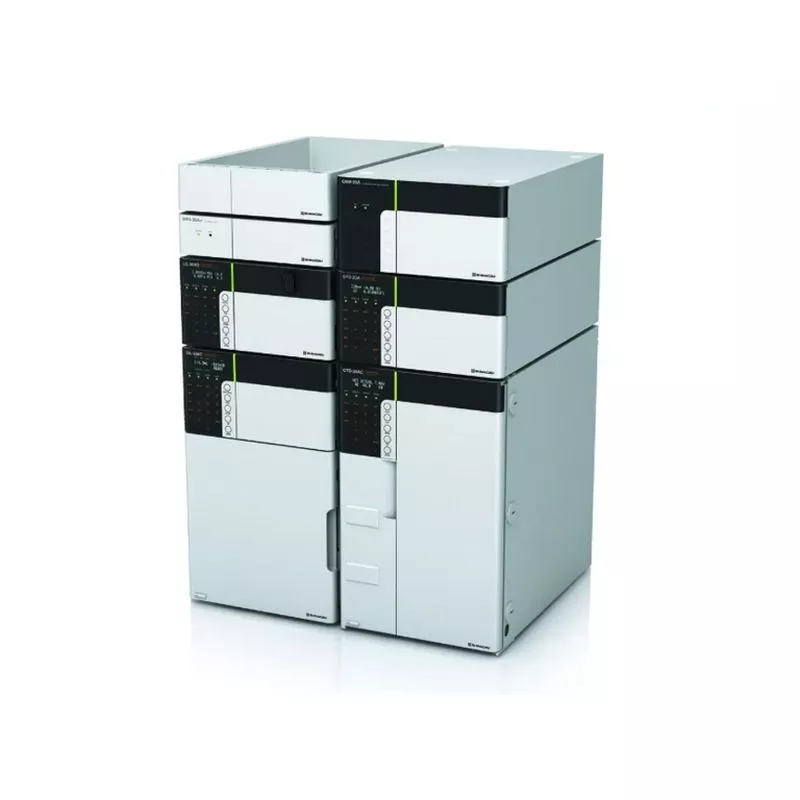
Liquid chromatograph LC-20 Prominence (LC-20AB pump)
Shimadzu (Japan)
Liquid chromatograph LC-20 Prominence (LC-20AD pump)
Shimadzu (Japan)
Liquid chromatograph LC-20 Prominence (LC-20AT pump)
Shimadzu (Japan)
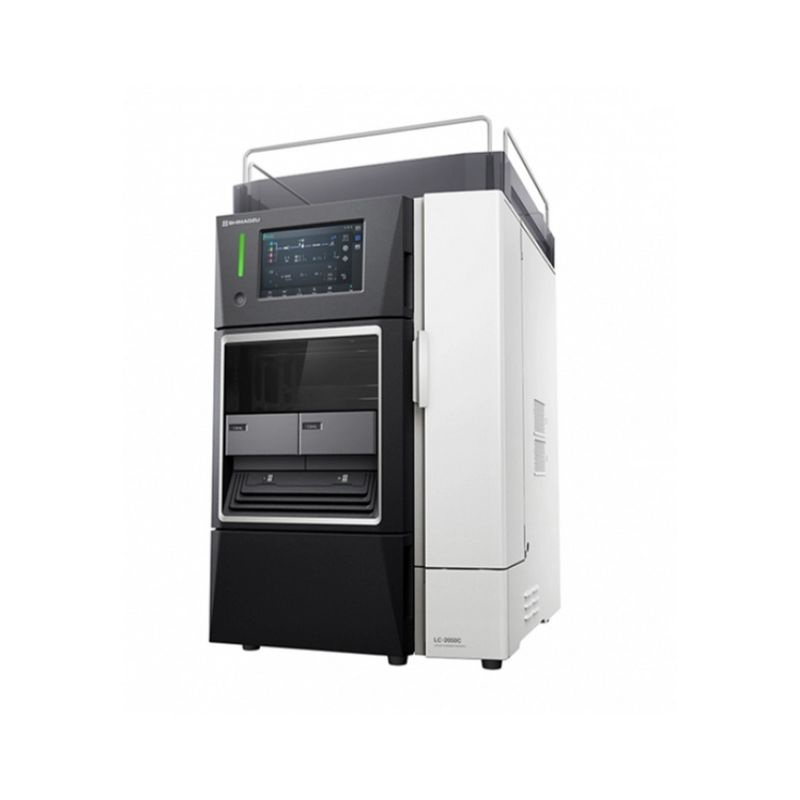
Liquid chromatograph, LC-2050 I-series
Shimadzu (Japan)
Liquid chromatograph, LC-2050C 3D I-series
Shimadzu (Japan)
Liquid chromatograph, LC-2050C I-series
Shimadzu (Japan)
Liquid chromatograph, LC-2050C LT i-Series
Shimadzu (Japan)
Liquid chromatograph, LC-2060C 3D I-series
Shimadzu (Japan)
Liquid chromatograph, LC-2060C 3D MT i-Series
Shimadzu (Japan)
Liquid chromatograph, LC-2060C I-series
Shimadzu (Japan)
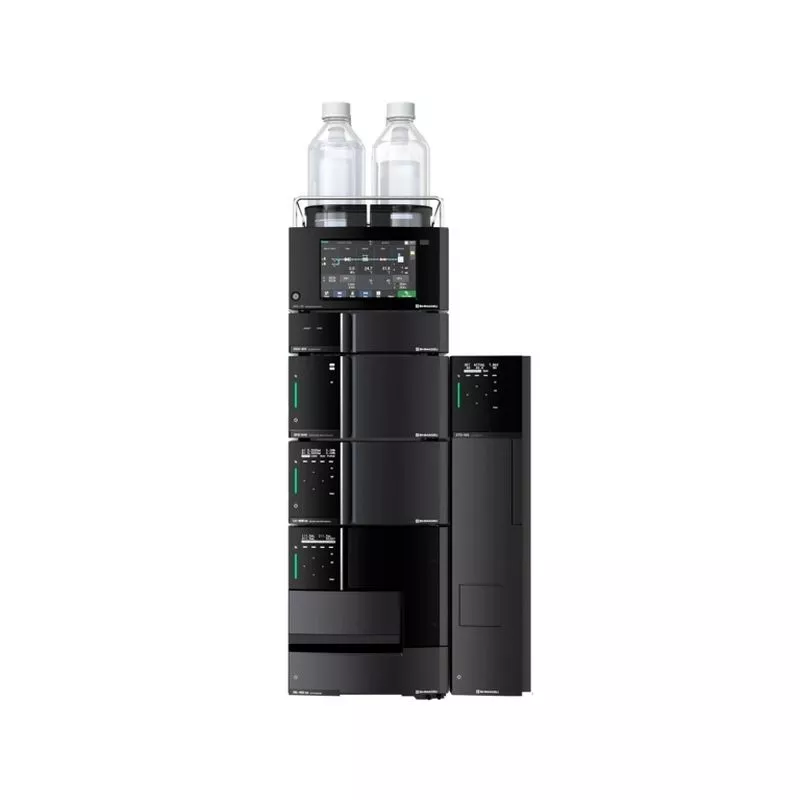
Liquid chromatograph, LC-40 NEXERA
Shimadzu (Japan)
What Is Chromatographic Equipment?
Chromatographic equipment includes analytical instruments and systems designed to separate components of complex mixtures, identify target substances, and determine their concentrations using appropriate analytical procedures. Chromatography is widely used to characterize organic and inorganic compounds, assess material purity, detect impurities and contaminants, and analyze pharmaceutical products, foods, petroleum products, and other samples.
The fundamental principle of chromatography is the separation of components between a mobile phase and a stationary phase. Differences in the physical and chemical properties of substances cause them to interact with the chromatographic column in different ways and leave the column at different times. The separated components are registered by a detector, and their signals are used for qualitative and quantitative analysis.
The main instrument categories include Gas Chromatographs (GC) and Liquid Chromatographs (LC), including High-Performance Liquid Chromatography (HPLC) and Ultra-High-Performance Liquid Chromatography (UHPLC) systems. Method selection depends on analyte volatility, thermal stability, solubility, polarity, and other relevant properties.
This category includes Shimadzu chromatographic equipment for quality control laboratories, chemical and pharmaceutical manufacturers, food production, environmental monitoring, the oil and gas industry, and research facilities. The range covers integrated and modular analytical systems as well as individual components for building or upgrading liquid chromatography systems.
Chromatographic Separation and the Analytical Workflow
Chromatographic separation takes place when sample components move through a column with the mobile phase. Substances differ in their affinity for the stationary phase and therefore travel through the column at different rates. This makes it possible to separate compounds that were initially present in the same mixture.
Gas chromatography uses a carrier gas as the mobile phase, while liquid chromatography uses a liquid solvent or solvent mixture. Suitable columns provide the required separation, and detectors record compounds as they emerge from the column.
A typical chromatographic workflow includes:
- Sample preparation — sampling, dissolution, extraction, filtration, dilution, or another procedure appropriate to the material.
- Sample introduction — introducing a defined sample volume manually or using an automatic injector.
- Chromatographic separation — passing sample components through a column using the selected mobile phase.
- Detection — recording the separated substances using a detector suited to their properties.
- Data processing — generating a chromatogram, determining retention times, integrating peaks, and evaluating the recorded signals.
- Identification and quantification — comparing results with reference substances, calibration relationships, and other evidence required by the analytical procedure.
The main result is a chromatogram, which shows detector response as a function of time or another relevant separation coordinate. Retention times, detector information, and reference standards may be used for identification. Quantification typically relies on a calibrated relationship between analyte concentration and detector response.
Matching retention times do not necessarily establish chemical identity. Complex samples may require selective detection, spectral information, mass spectrometry, or another confirmation technique.
Gas Chromatographs (GC)
Gas Chromatography (GC) is an analytical technique used to separate compounds that can be transferred to the gas phase without unacceptable decomposition under the selected testing conditions. It is widely employed for volatile and semi-volatile organic compounds, solvents, hydrocarbons, gas mixtures, and other GC-compatible substances.
A gas chromatograph introduces the sample into an injection system, after which a carrier gas transports the components through a chromatographic column. The compounds are separated according to their volatility and interactions with the stationary phase. Column oven temperature programming helps optimize the separation of substances with different boiling points.
Common GC components and technologies include:
- Capillary and packed columns — selected according to analyte properties and separation requirements.
- Split and splitless injectors — used to introduce suitable liquid samples into the analytical system.
- Headspace sampling systems — used to examine volatile components in the gas phase above a sample.
- Flame Ionization Detectors (FID) — widely used for many organic compounds, particularly hydrocarbons.
- Thermal Conductivity Detectors (TCD) — used where analytes differ in thermal conductivity from the carrier gas.
- Barrier Ionization Discharge Detectors (BID) — used for sensitive detection of a broad range of suitable gaseous and volatile compounds.
Available injection systems, columns, and detectors depend on the instrument configuration. Not every GC model includes all these capabilities as standard.
The category includes Shimadzu GC-2014, GC-2025, Nexis GC-2030, and TRACERA GC-2010PLUS-BID. These systems serve different applications ranging from routine gas chromatography to sensitive impurity measurements in gas mixtures.
The TRACERA GC-2010PLUS-BID uses a barrier ionization discharge detector for sensitive analysis of suitable gaseous compounds. The Nexis GC-2030 is a flexible platform offering different injection systems, detectors, and automation options. The appropriate configuration depends on sample composition, sensitivity requirements, and the analytical method.
Liquid Chromatographs: HPLC and UHPLC
Liquid Chromatography (LC) separates substances using a liquid mobile phase. It is suitable for a wide range of compounds, including nonvolatile, thermally unstable, polar, and high-molecular-weight substances that may be difficult or unsuitable to analyze by gas chromatography.
Modern systems commonly employ High-Performance Liquid Chromatography (HPLC) or Ultra-High-Performance Liquid Chromatography (UHPLC). Both approaches deliver mobile phases through chromatographic columns under controlled pressure. UHPLC uses appropriate high-efficiency columns, low-dispersion system designs, and instruments capable of operating at higher pressures.
Different separation mechanisms may be used depending on the application, including reversed-phase, normal-phase, ion-exchange, and size-exclusion chromatography. The column, mobile phase, temperature, and detection system must be selected for the target compounds.
Principal LC system components include:
- Solvent delivery pump — provides a stable mobile-phase flow through the separation column.
- Degasser — reduces dissolved gases that may interfere with system stability.
- Injector or autosampler — introduces a defined volume of sample into the mobile phase.
- Chromatographic column — separates mixture components according to their interactions with the stationary phase.
- Column oven — controls separation temperature to improve reproducibility.
- Detector — records compounds as they leave the column.
- Chromatography software — controls the system, acquires detector data, integrates peaks, and generates analytical results.
Available detection technologies include UV/VIS absorbance, Photodiode Array Detection (PDA or DAD), fluorescence, refractive index, and other specialized methods. Selection depends on analyte properties, required selectivity, and concentration range.
Liquid chromatography is not limited to samples that are originally liquids. Solid materials, powders, and biological specimens may also be analyzed after suitable dissolution, extraction, or other preparation.
Shimadzu i-Series and Nexera Liquid Chromatography Systems
The category includes integrated Shimadzu LC-2050/LC-2060 i-Series systems and the modular Shimadzu LC-40 Nexera platform for routine and high-performance laboratory analysis.
The LC-2050 i-Series consists of compact HPLC systems incorporating core analytical functions within an integrated instrument design. Depending on configuration, the systems may include spectrophotometric or photodiode array detection, sample cooling, and automated workflow features. The LC-2050C 3D configurations provide photodiode array detection, enabling acquisition of spectral information associated with chromatographic peaks.
The LC-2060 i-Series supports high-throughput applications and UHPLC methods. These systems can operate at higher pressures than the LC-2050 series and offer different detection configurations. Specialized variants are available for particular analytical and multi-method workflows.
The LC-40 Nexera is a modular chromatography platform assembled according to laboratory requirements. Depending on the selected pumps, autosamplers, columns, and detectors, the system can be configured for HPLC or UHPLC. Its modular construction supports method-specific setups and future expansion.
The catalog also includes Shimadzu LC-20AB, LC-20AD, and LC-20AT, which are individual solvent delivery modules for liquid chromatography. They provide controlled mobile-phase flow but are not complete chromatographic instruments without the other required system components.
Autosampling, gradient programming, instrument condition monitoring, and automated data processing can improve laboratory productivity. Actual features depend on the instrument version and installed accessories.
Qualitative and Quantitative Analysis
Chromatographic equipment is used both to identify components and to measure their concentrations in a sample. Reliable analysis requires adequate separation, stable detector performance, and a method appropriate to the substances under investigation.
Qualitative analysis commonly involves comparing sample retention times with those of reference standards. Additional detector selectivity or spectral information may help confirm component identity.
Quantitative analysis is based on a calibration relationship between detector response and known analyte concentration. Peak area or height, internal standards, and other calibration approaches may be used according to the analytical procedure.
Important separation performance characteristics include retention time, peak resolution, peak shape, column efficiency, reproducibility, and detection sensitivity. Depending on the method, detection limits, quantitation limits, linearity, accuracy, and precision may also need to be evaluated.
Results depend on more than instrument specifications. Solvent purity, column condition, sample preparation, temperature stability, calibration, and data processing all influence analytical quality. Highly sensitive instrumentation still requires an appropriately developed and verified method.
Automation, Software, and Quality Control
Modern gas and liquid chromatographs may incorporate automatic injectors, autosamplers, electronic gas and solvent flow control, instrument monitoring, and software for centralized analytical workflows.
Shimadzu chromatography systems may use suitable LabSolutions software solutions for instrument control, signal acquisition, chromatographic peak integration, calibration, reporting, and analytical data management.
Repeated measurements can be organized into automated sequences containing system suitability checks, reference standards, control samples, and unknown specimens. These workflows support consistency and more efficient laboratory operations.
Pharmaceutical analytical procedures may be developed and validated according to principles described in ICH Q2(R2) and ICH Q14. Individual chromatographic analyses must also meet the requirements of the applicable pharmacopoeial, industry, or laboratory method.
Instrument performance and analytical method validation are distinct matters. Automated hardware or advanced software does not independently establish regulatory compliance without suitable configuration, qualification, and verification.
Industrial Applications of Chromatographic Equipment
Gas and liquid chromatographs are widely used wherever complex mixtures must be separated, substances identified, and component concentrations measured.
- Pharmaceutical industry — determination of active ingredients, related impurities, residual solvents, and pharmaceutical product quality.
- Chemical manufacturing — analysis of organic compounds, reagents, synthesis products, solvents, and process mixtures.
- Oil and gas industry — investigation of gas composition, hydrocarbons, impurities, and petroleum products using applicable methods.
- Food industry — analysis of flavor compounds, additives, preservatives, residual contaminants, and other food components.
- Environmental monitoring — determination of organic pollutants, pesticides, solvents, and other compounds in water, soil, or air after suitable sample preparation.
- Biotechnology — investigation of selected biological molecules, fermentation products, and components of complex biological mixtures.
- Cosmetics manufacturing — analysis of fragrance ingredients, preservatives, impurities, and raw materials.
- Research laboratories — development of analytical procedures, investigation of chemical compounds, and comparative studies of experimental materials.
The choice between GC and LC depends on analyte properties and selectivity or sensitivity requirements. For certain applications, gas and liquid chromatography provide complementary analytical information.
How to Choose Chromatographic Equipment
Chromatograph selection should begin with sample composition, target analytes, expected concentrations, detection and quantitation requirements, throughput, and the applicable analytical procedure.
Gas chromatographs are often suitable for volatile, thermally stable compounds, gas mixtures, solvents, and many hydrocarbons. Injector design, column selection, carrier gas, detector, and automated sample introduction are important considerations.
Liquid chromatographs are commonly used for nonvolatile, thermally unstable, polar, and many high-molecular-weight compounds. Selection criteria include working pressure, mobile-phase flow range, gradient capability, autosampler characteristics, column compatibility, and available detectors.
Compact integrated systems may be appropriate for laboratories performing routine standardized methods. Modular chromatography platforms can be advantageous where specialized configurations, research applications, or future expansion are required.
Additional considerations include carrier gases, solvents, consumables, maintenance, ventilation, software, data archiving, and compatibility with laboratory infrastructure.
A properly selected chromatography system supports effective component separation, reproducible analytical results, and laboratory testing in accordance with established methods in industrial and research environments.