
Fluorescent Molecular Spectrophotometers
Spectrophotometers for high-sensitivity fluorescence measurements, used in biochemical, pharmaceutical, and environmental studies.
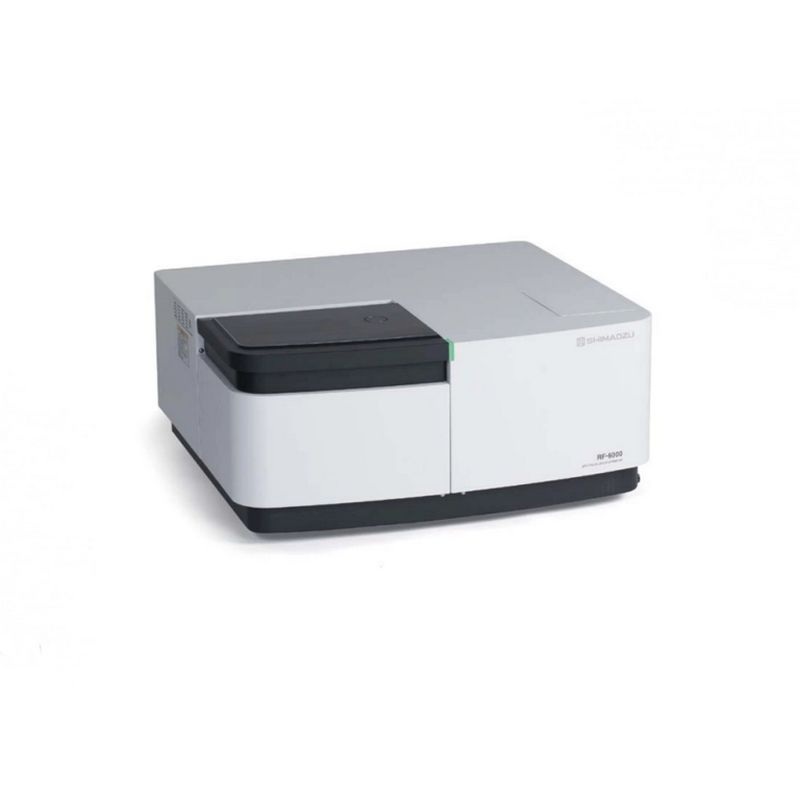
What Are Fluorescence Molecular Spectrophotometers?
Fluorescence molecular spectrophotometers are highly sensitive analytical instruments designed to investigate light emitted by substances following optical excitation. Fluorescence spectroscopy is based on the ability of certain molecules to absorb radiation and subsequently emit light, usually at a longer wavelength. The spectral characteristics of this emission provide information about the composition, concentration, and physicochemical properties of fluorescent compounds.
Fluorescence spectrophotometers, also known as spectrofluorometers, are used in biochemistry, pharmaceuticals, molecular biology, environmental monitoring, chemical manufacturing, and materials science. The technique is particularly valuable for determining low concentrations of fluorescent substances and for investigating specimens using fluorescent reagents and labels.
Operating Principle and Methods of Fluorescence Spectroscopy
During fluorescence analysis, a specimen is illuminated with light at a selected wavelength. Molecules that absorb the radiation enter an excited electronic state. As they return to a lower energy state, some molecules emit light, whose intensity and spectral characteristics are recorded by a detector.
Depending on spectrophotometer design and software capabilities, different measurement techniques may be available:
- Emission spectra — measurement of fluorescence intensity as a function of emission wavelength at a fixed excitation wavelength.
- Excitation spectra — recording fluorescence intensity while varying the excitation wavelength and keeping the detection wavelength constant.
- Three-dimensional EEM spectra — acquisition of an Excitation-Emission Matrix used to investigate the spectral characteristics of multicomponent specimens and compare fluorescence signals from different substances.
- Synchronous scanning — simultaneous variation of excitation and emission wavelengths according to a defined relationship between them. This technique can help distinguish components with similar spectral properties.
- Fluorescence quantum yield determination — evaluation of the ratio between emitted and absorbed photons. Measurements are performed using appropriate analytical procedures, including reference substances or specialized integrating spheres.
Measurement results are affected by substance concentration, solvent properties, temperature, pH, inner-filter effects, fluorescence quenching, and light scattering. At high concentrations, the relationship between fluorescence intensity and concentration may become nonlinear. Appropriate calibration procedures are therefore required for quantitative analysis.
Applications of Fluorescence Spectrophotometers
Fluorescence spectroscopy is used to investigate substances that exhibit intrinsic fluorescence or can be analyzed through fluorescent labeling.
- Biochemistry and molecular biology — protein investigations, including fluorescence of aromatic amino acids, nucleic acid analysis using fluorescent dyes, and studies of molecular interactions.
- Pharmaceutical industry — quantitative determination of fluorescent substances, investigation of pharmaceutical compounds, and development of highly sensitive analytical methods.
- Environmental monitoring — characterization of natural organic matter in water, humic-like and protein-like fluorescent components, and selected organic contaminants.
- Food industry — investigation of fluorescent constituents in food products, raw materials, and substances determined using fluorescence-based methods.
- Materials science and scientific research — analysis of luminescent materials, fluorescent dyes, polymers, optical coatings, and emission characteristics of newly developed compounds.
How to Choose a Fluorescence Molecular Spectrophotometer
When selecting a spectrofluorometer, important considerations include excitation and emission wavelength ranges, sensitivity, signal-to-noise ratio, spectral resolution, scanning speed, and available analytical modes. Three-dimensional EEM acquisition and synchronous scanning may be particularly useful for investigating complex mixtures.
Compatibility with liquid and solid specimens, temperature-controlled cells, specialized sample holders, integrating spheres, and software for spectral correction and quantitative analysis should also be evaluated. Availability of specific functions depends on instrument configuration.
A properly selected fluorescence spectrophotometer supports sensitive and reproducible fluorescence measurements, substance characterization, and quantitative analysis according to suitable laboratory procedures.