
Liquid Chromatographs
High-performance liquid chromatography (HPLC) systems for analyzing organic and inorganic compounds in solutions.
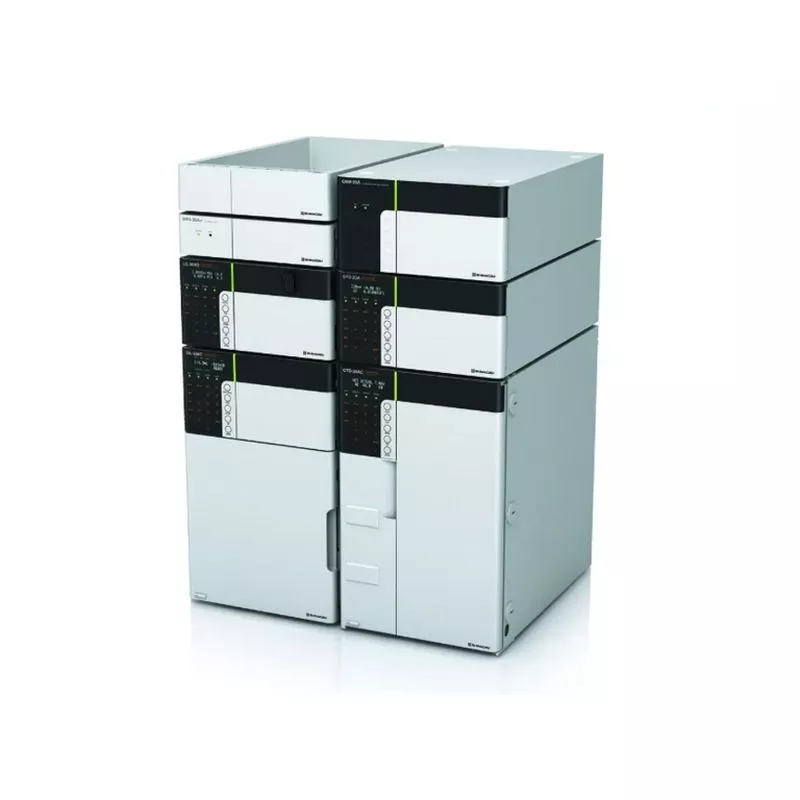
Liquid chromatograph LC-20 Prominence (LC-20AB pump)
Shimadzu (Japan)
Liquid chromatograph LC-20 Prominence (LC-20AD pump)
Shimadzu (Japan)
Liquid chromatograph LC-20 Prominence (LC-20AT pump)
Shimadzu (Japan)
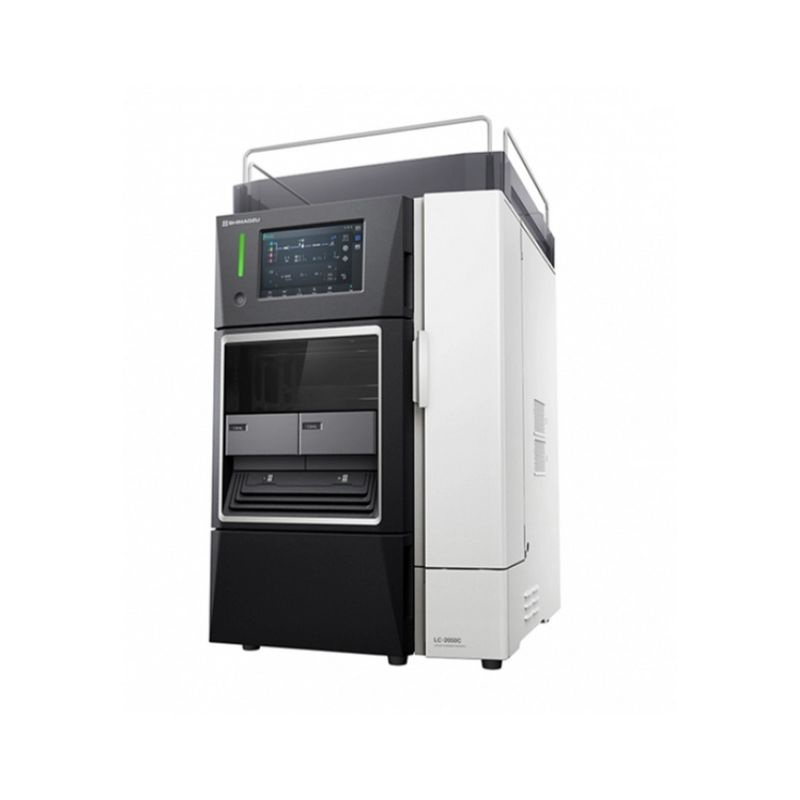
Liquid chromatograph, LC-2050 I-series
Shimadzu (Japan)
Liquid chromatograph, LC-2050C 3D I-series
Shimadzu (Japan)
Liquid chromatograph, LC-2050C I-series
Shimadzu (Japan)
Liquid chromatograph, LC-2050C LT i-Series
Shimadzu (Japan)
Liquid chromatograph, LC-2060C 3D I-series
Shimadzu (Japan)
Liquid chromatograph, LC-2060C 3D MT i-Series
Shimadzu (Japan)
Liquid chromatograph, LC-2060C I-series
Shimadzu (Japan)
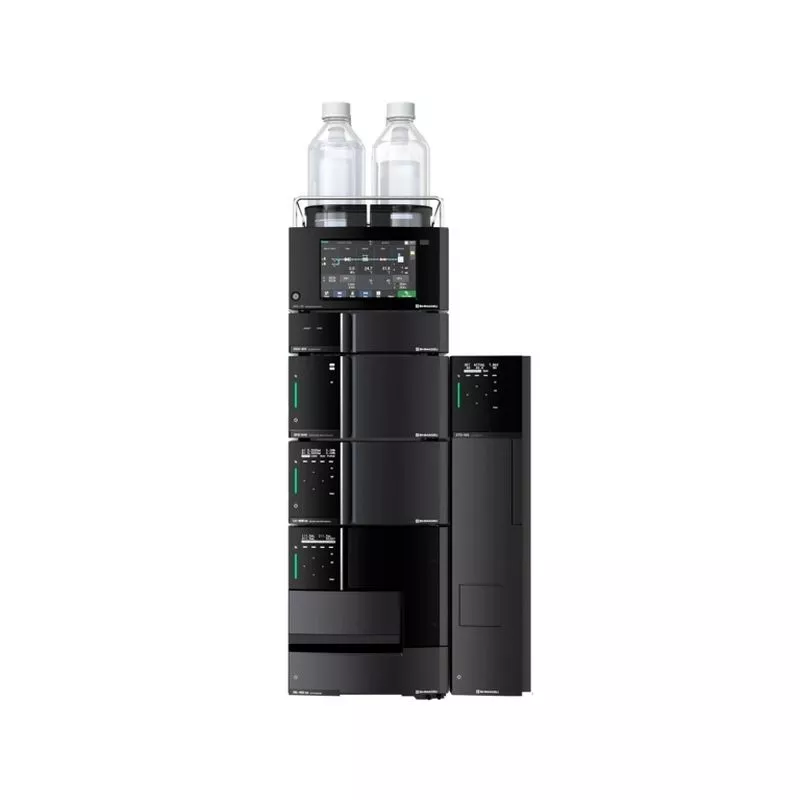
Liquid chromatograph, LC-40 NEXERA
Shimadzu (Japan)
.png)
Liquid chromatograph, NEXERA X2 (LC-30)
Shimadzu (Japan)
What Are Liquid Chromatographs?
Liquid chromatographs are laboratory analytical systems used to separate, identify, and quantify components of complex mixtures using a liquid mobile phase. Liquid Chromatography (LC) is suitable for a broad range of organic and inorganic compounds, including nonvolatile, thermally unstable, and polar substances that may be difficult or unsuitable to analyze by gas chromatography.
Liquid chromatography is widely applied in pharmaceutical, chemical, food, biotechnology, and cosmetics manufacturing, environmental laboratories, and research centers. Typical applications include active ingredient determination, impurity profiling, product purity testing, material comparisons, and quantitative quality control.
Modern instruments include High-Performance Liquid Chromatography (HPLC) and Ultra-High-Performance Liquid Chromatography (UHPLC) systems. These differ in allowable operating pressure, fluidic design, column compatibility, and their ability to perform high-efficiency separations.
The category includes integrated Shimadzu LC-2050 and LC-2060 i-Series systems, modular LC-40 Nexera and Nexera X2 (LC-30) platforms, and individual LC-20 solvent delivery modules. Available analytical functions depend on the installed configuration.
Operating Principle of Liquid Chromatography
Liquid chromatography separates mixture components as they travel through a column with a flowing liquid mobile phase. The column contains a stationary phase that interacts differently with individual compounds. As a result, substances move through the column at different rates and reach the detector at different times.
In modern HPLC and UHPLC instruments, a pump delivers the mobile phase at a controlled flow rate and pressure. Solvent composition, stationary phase properties, column temperature, and elution conditions determine separation efficiency and selectivity.
A typical analytical procedure includes:
- Sample preparation — dissolution, extraction, filtration, dilution, or another procedure appropriate to the sample.
- Mobile phase preparation — selecting solvents, buffers, and additives, followed by filtration or degassing where required.
- Sample injection — introducing a defined sample volume manually or by means of an autosampler.
- Chromatographic separation — separating components according to their interactions with the stationary phase.
- Detection — recording compounds as they leave the column using a suitable detector.
- Data processing — generating chromatograms, integrating peaks, evaluating separation performance, and calculating concentrations using calibration relationships.
The result is a chromatogram showing detector response over time. Retention times and detector characteristics support qualitative assessment, while peak areas or heights and suitable calibration procedures are used for quantitative determination.
Liquid chromatography is not restricted to samples that are initially liquid. Powders, solid materials, pharmaceuticals, food products, and biological specimens may be analyzed following appropriate preparation. However, matching retention times alone do not necessarily provide conclusive chemical identification.
HPLC and UHPLC: Elution Modes and Separation Techniques
High-Performance Liquid Chromatography (HPLC) is widely used for routine testing and separation of complex mixtures. These systems deliver liquid mobile phases through columns under controlled conditions and support different elution modes.
Ultra-High-Performance Liquid Chromatography (UHPLC) uses equipment capable of operating at elevated pressures with compatible high-efficiency columns and reduced extra-column dispersion. With suitable methods, this can shorten analysis times or improve separation performance.
Common mobile phase delivery modes include:
- Isocratic elution — the mobile phase composition remains constant throughout the separation, making it suitable for mixtures with appropriate retention characteristics.
- Gradient elution — mobile phase composition changes according to a programmed profile, which can improve analysis of mixtures containing compounds with widely differing retention properties.
- High-pressure gradient — solvents are delivered by separate pumping channels and mixed downstream of the pumps.
- Low-pressure gradient — solvents are proportioned and mixed upstream of the pump using a suitable valve system.
Different separation mechanisms may also be applied, including reversed-phase, normal-phase, ion-exchange, size-exclusion, and other liquid chromatography techniques. Column selection, mobile phase composition, temperature, and detector choice must match the analytical objective.
HPLC and UHPLC methods are not always directly interchangeable. Method transfer may require evaluation of gradient delay volume, extra-column dispersion, column characteristics, and applicable regulatory criteria.
Main Components and Detectors of Liquid Chromatography Systems
Modern liquid chromatographs consist of several interconnected modules, each contributing to system stability and separation performance.
- Solvent delivery pump — provides the required mobile phase flow rate at the specified operating pressure. Gradient systems may employ multiple solvent channels.
- Degasser — reduces dissolved gases in the mobile phase and helps prevent bubble formation in the fluidic system.
- Autosampler — introduces defined sample volumes and supports automated sequences.
- Chromatographic column — contains the stationary phase. Sorbent chemistry, particle size, column length, and internal diameter affect selectivity and separation efficiency.
- Column oven — maintains controlled temperature to improve separation reproducibility.
- Detector — records separated compounds using a suitable physical or chemical detection principle.
- Chromatography software — controls instruments, records detector signals, integrates peaks, manages calibration, and generates reports.
Liquid chromatography uses different detection technologies:
- UV/VIS detector — measures compounds that absorb ultraviolet or visible radiation at the selected wavelengths.
- Photodiode Array Detector (PDA/DAD) — acquires spectral information over a specified wavelength range and supports evaluation of chromatographic peak spectra.
- Fluorescence Detector (FLD) — is used for compounds exhibiting suitable native fluorescence or after derivatization.
- Refractive Index Detector (RID) — measures refractive index changes and can be used for selected substances that lack suitable UV absorption.
- Mass Spectrometric Detector (MS) — provides additional selectivity and mass-to-charge information in an appropriately configured LC-MS system.
Available detectors depend on instrument configuration. Built-in UV detectors, PDA modules, and external detectors are not interchangeable without verifying system compatibility.
Shimadzu LC-2050 and LC-2060 i-Series Integrated Systems
The Shimadzu i-Series combines compact integrated construction, automated sample injection, programmed solvent delivery, and digital analytical control. These instruments are designed for routine quality control and laboratories performing repeated analytical procedures.
The Shimadzu LC-2050 is an HPLC system with a maximum operating pressure of up to 50 MPa under the specified mobile phase delivery conditions. Available configurations include:
- LC-2050 — a basic integrated HPLC with UV detection and no built-in sample cooler.
- LC-2050C — a UV detector configuration incorporating sample temperature control.
- LC-2050C 3D — a system featuring PDA detection for acquiring spectral information from chromatographic peaks.
- LC-2050C LT — a detector-less configuration designed to operate with a compatible external detector.
The Shimadzu LC-2060 is an integrated UHPLC system supporting operating pressures of up to 70 MPa under the specified conditions. It is intended for high-efficiency separation, rapid analytical methods, and method transfer between chromatography systems.
Available LC-2060 configurations include:
- LC-2060C — an integrated UHPLC with UV detection and sample temperature control.
- LC-2060C 3D — a model featuring a PDA detector for spectral evaluation of chromatographic peaks.
- LC-2060C 3D MT — a Method Transfer configuration featuring two fluidic flow paths designed to reproduce HPLC and UHPLC gradient conditions.
The i-Series may support automatic analytical sequences, instrument status monitoring, programmed rinsing, and diagnostic functions. Available features depend on the instrument model, software, and supplied accessories.
Shimadzu Nexera and Nexera X2 Modular Systems
Shimadzu LC-40 Nexera is a modular liquid chromatography platform that can be configured according to laboratory method requirements. Available modules include different pumps, degassers, autosamplers, column ovens, detectors, and system controllers.
Depending on the selected components, Nexera can be configured for conventional HPLC or UHPLC. The available operating pressure depends on the pump and other modules, so a specific pressure rating should be stated for the selected configuration rather than applied to the entire LC-40 series.
The modular design supports additional detection technologies, different gradient arrangements, automated workflows, and future system expansion.
Shimadzu Nexera X2 (LC-30) is an earlier-generation modular UHPLC platform designed for high-efficiency and rapid liquid chromatography. Systems equipped with the LC-30AD pump may operate at pressures up to 130 MPa within the manufacturer's specified flow rate range. Suitable configurations support high-efficiency columns, gradient methods, and automated sample handling.
Nexera X2 based on LC-30 and the Nexera LC-40 family represent different generations of modular instruments. Their components, specifications, and compatibility requirements must therefore be evaluated separately.
Shimadzu LC-20AB, LC-20AD, and LC-20AT Solvent Delivery Modules
In addition to complete chromatography systems, this category includes individual Shimadzu LC-20 solvent delivery units used for building, servicing, or upgrading compatible HPLC configurations.
Shimadzu LC-20AB is a high-pressure binary solvent delivery unit incorporating two pumping mechanisms for generating gradients with two solvents.
Shimadzu LC-20AD is a precision solvent delivery pump designed for stable mobile phase flow in suitable isocratic or gradient HPLC arrangements.
Shimadzu LC-20AT is a solvent delivery module designed for controlled mobile phase flow in compatible laboratory systems.
All three products are individual system components, not complete stand-alone chromatographs. A functional HPLC system also requires the appropriate injector or autosampler, column, detector, control components, and data processing capabilities.
Measurement Quality, Calibration, and HPLC Method Validation
Reliable liquid chromatography results depend on stable mobile phase delivery, accurate sample injection, column performance, detector operation, sample preparation, and correct chromatographic data processing.
Instrument maintenance, calibration, qualification, and system suitability checks are used to support analytical performance. These activities may include verification of mobile phase flow rate, injection accuracy and precision, detector wavelength accuracy, baseline stability, and other parameters relevant to the method.
System Suitability Testing (SST) confirms that a chromatographic system performs adequately under the specified analytical conditions. Criteria may include peak area repeatability, resolution, column efficiency, peak shape, and other method-specific parameters.
Analytical method validation is a separate process and may involve evaluation of specificity or selectivity, accuracy, precision, linearity, range, detection and quantitation limits, and robustness, as appropriate for the method.
Pharmaceutical analytical procedures may follow ICH Q2(R2), ICH Q14, and relevant pharmacopoeial requirements, including USP <621> for chromatography.
Requirements for legally mandated instrument verification depend on the applicable jurisdiction, regulated measuring instrument categories, and intended use. Not every laboratory HPLC system is automatically subject to the same periodic legal verification procedure. Calibration, qualification, and recordkeeping requirements also depend on laboratory quality systems.
Industrial Applications of Liquid Chromatographs
Liquid chromatography is used for qualitative and quantitative analysis of complex mixtures and testing against specified product quality requirements.
- Pharmaceutical manufacturing — determination of active ingredients, related impurities, degradation products, and pharmaceutical product quality.
- Biotechnology — characterization of suitable biomolecules, fermentation products, and biological mixture components.
- Food industry — analysis of additives, preservatives, vitamins, colorants, selected toxins, and other substances.
- Environmental laboratories — determination of organic pollutants, pesticides, and other compounds in water, soil, and environmental samples after appropriate preparation.
- Chemical industry — examination of synthesis products, organic compounds, impurities, and processing mixtures.
- Cosmetics industry — analysis of preservatives, active ingredients, dyes, and impurities in raw materials and finished products.
- Petrochemical industry — analysis of selected organic compounds, additives, and chemical processing products.
- Research laboratories — investigation of complex mixtures, method development, HPLC/UHPLC method transfer, and characterization of experimental substances.
Analytical sensitivity and selectivity depend on analyte properties, column chemistry, detector selection, and method conditions. Additional spectral data or LC-MS may be required to identify unknown components confidently.
How to Choose a Liquid Chromatograph
Instrument selection should begin with sample composition, target analytes, expected concentrations, separation requirements, detection technology, throughput, and the analytical procedures used by the laboratory.
Integrated Shimadzu LC-2050 i-Series systems may be suitable for routine HPLC analysis. Applications requiring higher operating pressure, rapid separation, and UHPLC-compatible columns may benefit from the LC-2060 i-Series.
Where spectral characterization of peaks is important, a configuration featuring a PDA detector should be considered. For specialized external detectors, compatibility with the selected instrument and software must be confirmed.
Modular Nexera systems may be preferable for customized configurations, future expansion, or high-throughput workflows. When selecting LC-20 pump modules, compatibility with the remaining system components and the intended gradient mode is essential.
Other considerations include pressure and flow ranges, gradient delay volume, autosampler performance, column temperature control, solvent compatibility, software, and analytical recordkeeping.
A properly configured liquid chromatograph supports efficient component separation, reproducible analytical measurements, and laboratory quality control according to validated or otherwise appropriately established analytical methods.