
Gas Chromatographs
Instruments for separation and analysis of volatile components of mixtures using gas chromatography.
What Are Gas Chromatographs?
Gas chromatographs are analytical instruments designed to separate, identify, and quantify components of gas mixtures, volatile organic compounds, and other substances suitable for gas chromatographic analysis. Gas Chromatography (GC) is widely used in the chemical, petrochemical, pharmaceutical, and food industries, environmental monitoring, forensic laboratories, and scientific research.
Gas chromatography is suitable for compounds that can enter the gas phase without unacceptable thermal decomposition under the selected testing conditions. Applications include hydrocarbons, organic solvents, fragrance compounds, residual impurities, permanent gases, and other substances depending on the instrument configuration.
A gas chromatograph typically consists of a sample introduction system, carrier gas flow controller, column oven, detector, and data processing software. Depending on the analytical method, instruments may be configured with different injection systems, capillary or packed columns, autosamplers, and specialized detectors.
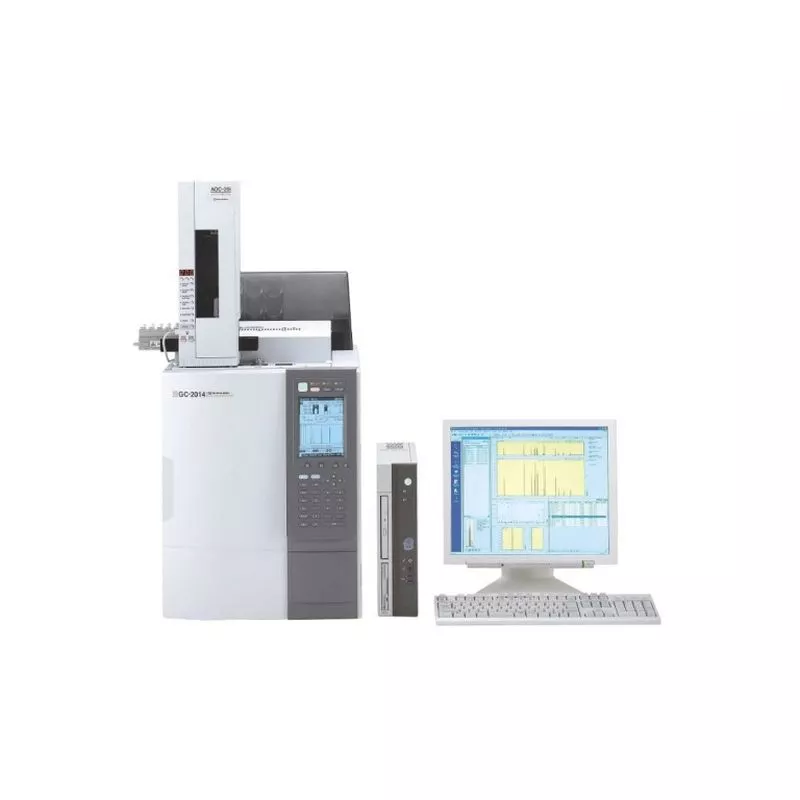
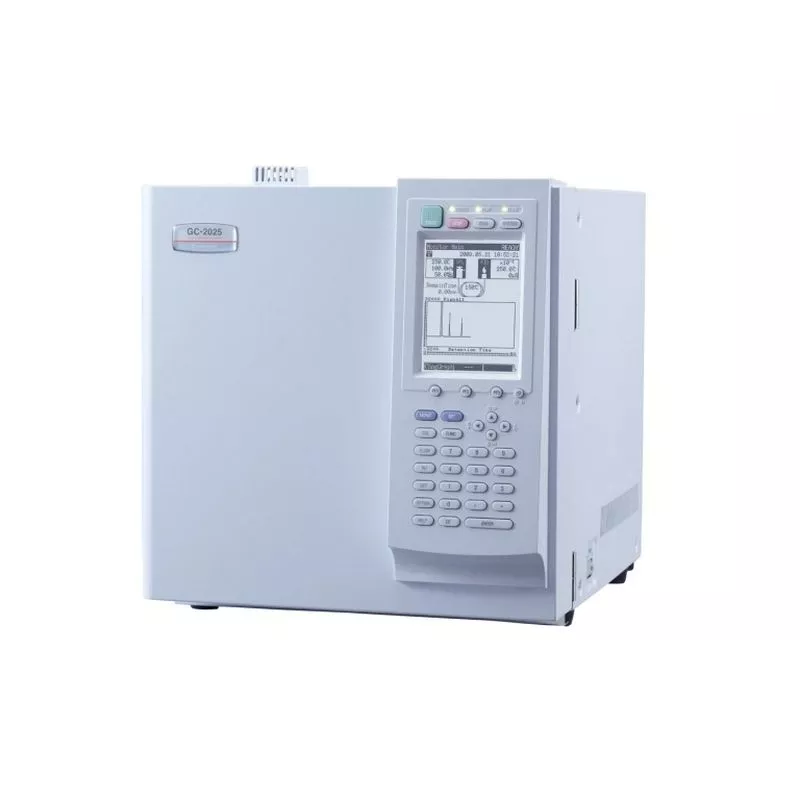
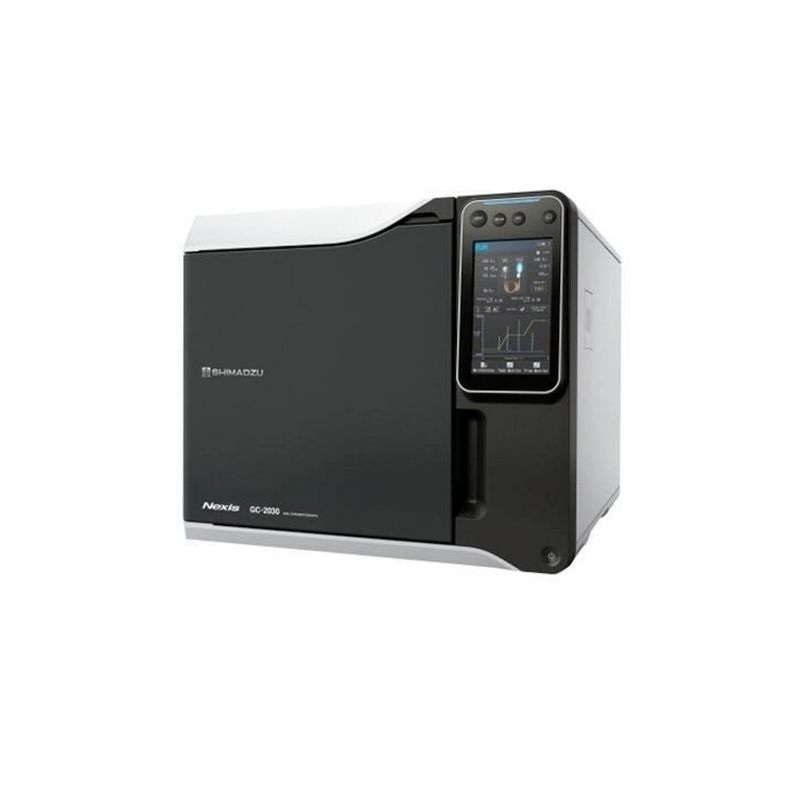
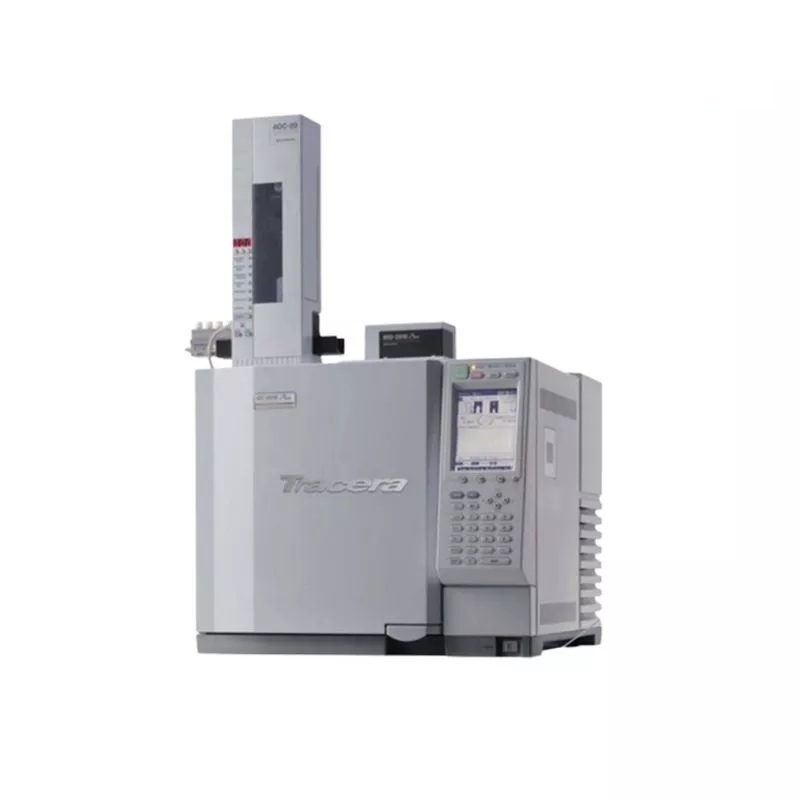
The category includes Shimadzu GC-2014, GC-2025, Nexis GC-2030, and TRACERA GC-2010 Plus-BID. These systems differ in their architecture, configuration flexibility, detector options, and intended applications, ranging from routine organic compound analysis to sensitive determination of impurities in gas mixtures.
Operating Principle of Gas Chromatography
Gas chromatography separates mixture components as they travel through a chromatographic column carried by a flowing gas. Substances interact differently with the stationary phase and therefore pass through the column at different rates.
The mobile phase is a carrier gas, such as helium, hydrogen, or nitrogen. Gas selection depends on the detector, column properties, analytical method, and safety requirements. The stationary phase is located inside a capillary column or on a suitable support in a packed column.
During separation, sample components are retained to different degrees according to their volatility, polarity, and interactions with the stationary phase. Column oven temperature programming can improve the separation of compounds with different properties.
A typical GC workflow includes:
- Sample preparation — collecting gas or liquid samples, extracting, concentrating, diluting, or otherwise preparing them according to the method.
- Sample introduction — introducing the sample through an injector or a dedicated gas sampling system.
- Carrier gas transport — moving sample components through the column under controlled flow and pressure conditions.
- Chromatographic separation — separating compounds into individual zones through their different interactions with the stationary phase.
- Detection — recording compounds as they leave the column using an appropriate detection principle.
- Data processing — generating a chromatogram, integrating peaks, comparing standards, and calculating concentrations.
The analytical result is a chromatogram showing detector response as a function of time. Peak positions are described by retention times, while peak area or height may be used for quantification through established calibration relationships.
Retention time depends on analytical conditions and is not a unique chemical identifier. Reference standards, additional separation conditions, or selective detection may be required to confirm components in complex mixtures.
Capillary and Packed Columns and Sample Introduction
The chromatographic column is the main component responsible for separating substances. Its properties affect efficiency, selectivity, analysis time, and the ability to resolve target compounds in complex mixtures.
Capillary columns have small internal diameters and a stationary phase located on the inner surface. They are widely used for organic compounds, residual solvents, fragrance components, pesticides, and other analytes. Column length, internal diameter, film thickness, and stationary phase chemistry must be selected for the method.
Packed columns contain an adsorbent or support carrying a stationary phase. They are used for suitable gas mixture applications, industrial gases, and methods requiring particular separation mechanisms.
Different sample introduction techniques may be employed:
- Split/Splitless injection — introduces suitable liquid samples into capillary GC systems, with or without flow splitting.
- Direct injection — introduces samples through a dedicated injection unit.
- On-column injection — transfers the sample directly into the column under specified conditions.
- Programmed Temperature Vaporization (PTV) — controls injector temperature during sample introduction.
- Headspace sampling — analyzes volatile components in the gas phase above a sample without introducing the entire sample matrix.
- Gas sampling valves and sample loops — introduce defined volumes of gas mixtures for appropriate analytical methods.
Available injection techniques depend on instrument configuration. Headspace systems, gas valves, additional injection ports, and autosamplers are not necessarily included in standard instrument packages.
Gas Chromatography Detectors: FID, TCD, BID, and Others
Detector selection determines which compounds can be measured and influences selectivity, sensitivity, and concentration range. Different detector technologies use distinct physical or chemical detection principles.
- Flame Ionization Detector (FID) — widely used for many organic compounds, particularly hydrocarbons. It measures ionization-related current generated in a hydrogen-air flame and is not universal for inorganic gases.
- Thermal Conductivity Detector (TCD) — detects changes in thermal conductivity as sample components pass through the detector. It is used for gas mixtures and compounds with thermal conductivity different from the carrier gas.
- Electron Capture Detector (ECD) — provides high sensitivity for compounds with suitable electron-capturing properties, including many halogenated substances.
- Flame Photometric Detector (FPD) — provides selective detection for certain sulfur- and phosphorus-containing compounds.
- Flame Thermionic Detector (FTD) — is used for suitable nitrogen- and phosphorus-containing organic compounds.
- Barrier Discharge Ionization Detector (BID) — uses helium plasma to ionize a broad range of gaseous and volatile compounds. It provides sensitive detection for many organic and inorganic components, excluding helium and neon.
- Sulfur Chemiluminescence Detector (SCD) — is a specialized detector for sensitive measurement of sulfur-containing compounds in suitable systems.
For example, FID is frequently used for hydrocarbon analysis, while TCD may be appropriate for permanent gases. BID systems can be useful for sensitive determination of trace components in complex gas mixtures.
No detector provides identical sensitivity for every compound. Detection and quantitation limits depend on the analyte, sample introduction technique, separation conditions, and detector operating parameters.
Shimadzu GC-2014 and GC-2025 Gas Chromatographs
Shimadzu GC-2014 is a configurable gas chromatograph designed for routine and specialized laboratory methods. The instrument supports capillary and packed columns and can be equipped with different sample introduction systems and detectors.
Available GC-2014 detector options include FID, TCD, ECD, FPD, and FTD. An electronic flow controller provides carrier gas parameter control, while the instrument display allows operators to monitor method conditions. The maximum column oven temperature is 400 °C.
Shimadzu GC-2025 is a compact gas chromatograph designed for organic compound analysis using a capillary column and Flame Ionization Detector. It features a split/splitless injector, electronic gas flow control, and a compact 5.6 L column oven.
The GC-2025 is intended for laboratories requiring a dedicated system for routine analysis of suitable volatile organic compounds. Its column oven operates up to 400 °C. An optional liquid CO₂ cooling unit can provide lower-temperature operation according to the applicable specifications.
Its compact, energy-saving design can be complemented by compatible automatic sample introduction accessories. However, the standard single-FID architecture is not a substitute for multidetector systems when applications require a broad range of permanent gases to be quantified.
Shimadzu Nexis GC-2030 Gas Chromatograph
Shimadzu Nexis GC-2030 is a multifunctional gas chromatography platform for routine laboratory analysis and more complex analytical applications. It supports different injection systems, detector types, capillary columns, and packed columns, allowing the configuration to match sample composition and method requirements.
Depending on configuration, the Nexis GC-2030 can control up to three injection units and four detectors simultaneously. Available detector types include FID, TCD, BID, ECD, FPD, FTD, and SCD. The column oven reaches up to 450 °C, while electronic carrier gas control supports pressure, flow, and average linear velocity operating modes.
A color touchscreen provides access to instrument parameters and operating conditions. ClickTek technology simplifies certain maintenance procedures and column connections without additional tools.
With suitable software and options, the Nexis GC-2030 supports automated analytical sequences, remote monitoring, instrument condition checks, and control of selected operating parameters. Analytical Intelligence features are intended to simplify setup, diagnostics, and repeatable laboratory workflows.
Its flexible configuration enables applications involving hydrocarbons, organic solvents, suitable gas mixtures, contaminants, and other analytes. Actual analytical capabilities depend on the selected injection systems, columns, detectors, and software.
Shimadzu TRACERA GC-2010 Plus-BID for Sensitive Analysis
Shimadzu TRACERA GC-2010 Plus-BID is a specialized gas chromatography system based on the GC-2010 Plus platform and equipped with a BID-2010 Plus Barrier Discharge Ionization Detector. It is intended for sensitive analysis of suitable organic and inorganic compounds, including trace impurities in gas mixtures and chemical process products.
The BID detector generates low-temperature helium plasma using a dielectric barrier discharge. Plasma radiation ionizes compounds entering the detector from the chromatographic column. The resulting ions produce an electrical signal used to register the separated substances.
This approach enables detection of a broad range of compounds, including certain permanent gases, oxygen-containing organic substances, and light hydrocarbons. Helium and neon are important exceptions that cannot be directly detected by this principle.
According to Shimadzu, the BID-2010 Plus has a minimum detectable response of 1 pg C/s for dodecane under specified operating conditions and a dynamic range of 10⁵. These values describe a particular test procedure and do not establish an identical detection limit for every analyte.
The BID uses high-purity helium and does not require the hydrogen flame associated with FID operation. The TRACERA system is suitable for selected industrial gas impurity measurements, chemical reaction studies, and other sensitive gas chromatographic applications.
Qualitative and Quantitative Analysis and Sample Preparation
Gas chromatography is used to identify mixture components and determine their concentrations. Reliable results require adequate separation, appropriate detection, and suitable reference standards.
Qualitative analysis compares component retention times with reference substances under the same chromatographic conditions. Retention time alone may be insufficient for complex mixtures, especially when compounds have similar separation behavior.
Quantitative analysis uses a relationship between analyte amount and detector response. External or internal calibration, chromatographic peak area or height, and other parameters may be applied according to the analytical method.
Sample preparation is particularly important. Headspace sampling can be used for volatile components of liquids and solids, while suitable extraction, enrichment, and cleanup procedures may be required for trace components in complex matrices.
Analytical performance depends on carrier gas purity, leak-free gas lines, flow stability, injector and column condition, oven temperature, detector calibration, and data processing.
Pharmaceutical methods may use pharmacopoeial requirements such as USP <621> for chromatography. Analytical method development and validation may also follow principles in ICH Q2(R2) and ICH Q14. Compliance depends on the validated procedure and qualified system, not solely on the instrument model.
Industrial Applications of Gas Chromatographs
Gas chromatographs are used in industrial and research laboratories to investigate gas mixtures, volatile substances, and other compounds suitable for GC separation.
- Oil, gas, and petrochemical industries — determination of gas composition, hydrocarbons, process gases, impurities, and suitable fuel components.
- Pharmaceutical manufacturing — determination of residual solvents, volatile impurities, and selected pharmaceutical quality parameters.
- Chemical industry — analysis of solvents, reaction products, volatile raw material components, and process mixtures.
- Food industry — determination of fragrance compounds, volatile constituents, selected contaminants, and food ingredient properties.
- Environmental monitoring — analysis of volatile organic compounds and other relevant pollutants in air, water, and soil following suitable sample preparation.
- Forensic science and toxicology — analysis of volatile substances, solvents, and other compounds according to specialized procedures.
- Energy industry — investigation of process gases, gaseous components, and related industrial mixtures.
- Research laboratories — examination of complex mixtures, chemical reaction products, and development of chromatographic methods.
Applications requiring high selectivity or structural identification of unknown compounds may employ Gas Chromatography-Mass Spectrometry (GC-MS). Such systems require a suitable mass spectrometer and are not equivalent to standard GC configurations supplied with conventional detectors.
How to Choose a Gas Chromatograph
Instrument selection should begin with sample composition, target analyte properties, expected concentration levels, required detection and quantitation limits, laboratory throughput, and applicable analytical standards.
A single-FID system such as the Shimadzu GC-2025 may be suitable for routine determination of organic compounds and hydrocarbons. For methods requiring different column types, injection systems, and detectors, more flexible platforms such as the GC-2014 or Nexis GC-2030 may be preferable.
Where the primary task is sensitive measurement of selected trace gases, the TRACERA GC-2010 Plus-BID may be appropriate. However, choosing between BID, TCD, FID, and other detectors should be based on the actual analytes, method requirements, and required sensitivity.
Other important factors include column oven temperature range, carrier gas flow control, column compatibility, autosampling options, gas purity and consumption, software capabilities, and maintenance requirements.
Laboratories processing numerous similar samples may benefit from autosamplers, automated sequences, system suitability tests, and result archiving. Multimethod laboratories should also consider the instrument's capacity for additional injection units, detectors, and flow control systems.
A properly selected gas chromatograph provides effective component separation, reproducible qualitative and quantitative results, and reliable laboratory analysis according to established methods.