
X-ray Diffractometers
Instruments for determining the crystalline structure of materials by X-ray diffraction.
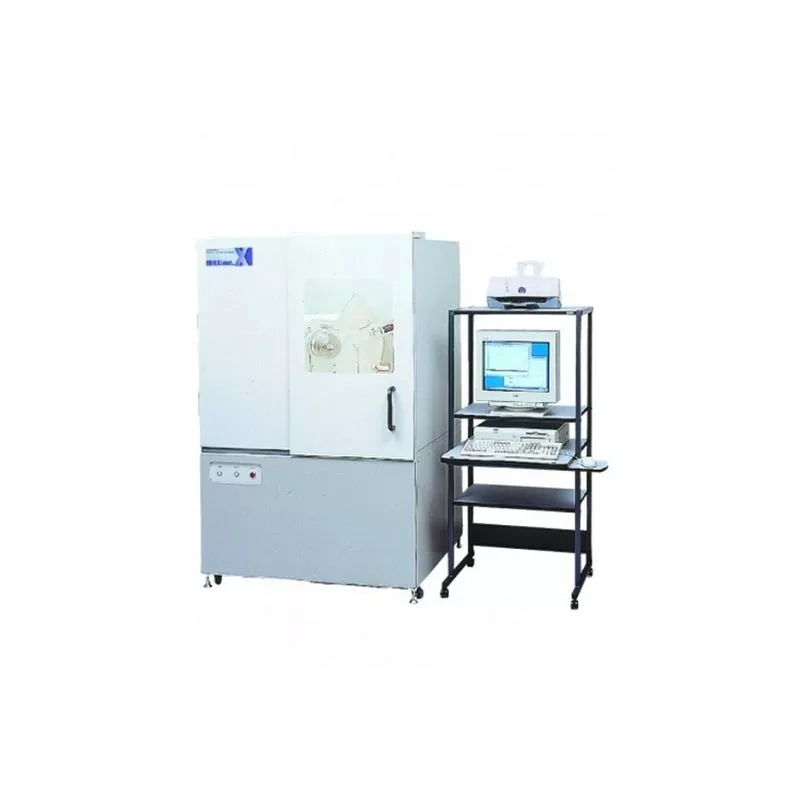
What Is an X-ray Diffractometer (XRD)?
X-ray diffractometers (XRD) are analytical laboratory instruments designed to investigate the crystal structure and phase composition of materials using X-ray diffraction. Unlike X-ray fluorescence spectrometers, which are primarily used to determine elemental composition, diffractometers help identify the crystalline phases present in a substance and characterize its structural features.
X-ray diffraction analysis is used to examine metals, alloys, powders, minerals, ceramics, polymers, pharmaceutical substances, and thin-film materials. The technique supports crystalline phase identification, assessment of lattice parameters, degree of crystallinity, and other structural characteristics according to the analytical method applied.
Operating Principle of X-ray Diffractometers
X-ray diffraction is based on the interaction of X-ray radiation with the ordered crystal structure of a material. X-rays are scattered by atomic electrons, producing diffraction maxima at specific angles. The positions of these maxima are related to the distances between crystallographic planes according to Bragg's law.
During measurement, an X-ray source irradiates the specimen while a detector records the intensity of diffracted radiation as a function of angle. The resulting diffractogram plots X-ray intensity against the diffraction angle, usually expressed as 2θ. Peak positions, intensities, and shapes provide information about the phase composition and crystal structure of the examined material.
The main components of an X-ray diffractometer include an X-ray tube, beam-forming optics, a precision goniometer for controlling measurement geometry, a detector, and analytical software. Depending on instrument design, θ–2θ or θ–θ geometries, focusing or parallel-beam optics, and additional modules for specialized measurements may be available.
Capabilities of X-ray Diffraction Analysis
X-ray diffractometers support different structural analysis methods depending on measurement geometry, specimen preparation, and software configuration.
- Qualitative phase analysis — identification of crystalline phases by comparing measured diffraction patterns with reference diffraction data.
- Quantitative phase analysis — estimation of individual crystalline phase fractions using appropriate methods, including Rietveld refinement.
- Crystal lattice parameter determination — examination of interplanar spacings and structural changes in crystalline materials.
- Crystallite size estimation — evaluation of diffraction peak broadening to estimate coherent scattering domain sizes while accounting for instrumental effects and microstrain. Crystallite size does not necessarily correspond to particle or grain size.
- Residual stress and texture analysis — investigation of elastic lattice strain and preferred crystallite orientation using suitable measurement geometries.
- Thin-film and coating analysis — investigation of phase composition, orientation, and structural characteristics of surface layers using specialized measurement modes.
XRD is most informative for materials with crystalline order. Amorphous substances generally produce broad diffuse features rather than sharp diffraction peaks, so their structural characterization differs from crystalline phase analysis. Peak overlap, preferred orientation, specimen homogeneity, and measurement conditions also influence analytical reliability.
Applications of X-ray Diffractometers
XRD systems are used in research, production, and quality control laboratories to determine phase composition and investigate structural changes in materials.
- Metallurgy and mechanical engineering — analysis of phase transformations in steels and alloys, retained austenite determination, texture characterization, and residual stress measurement.
- Geology and mineralogy — identification of mineral phases in ores, rocks, and geological specimens.
- Chemical industry — characterization of crystalline compounds, catalysts, powders, and chemical process products.
- Pharmaceutical research — investigation of crystalline forms and polymorphism, evaluation of crystallinity, and quality control of solid pharmaceutical substances.
- Ceramics and construction materials manufacturing — phase analysis of cement, clinker, ceramics, and heat-treated materials.
- Electronics and materials science — examination of thin films, functional coatings, crystalline materials, and structural changes during manufacturing.
How to Choose an X-ray Diffractometer for a Laboratory
When selecting an XRD system, the first step is to define the analytical tasks: crystalline phase identification, quantitative phase analysis, powder characterization, residual stress measurement, or thin-film analysis. These applications place different requirements on the goniometer, X-ray optics, detectors, and software.
For powder analysis, important specifications include angular range, resolution, measurement stability, and phase identification capabilities. For large, uneven, or geometrically complex specimens, available parallel-beam optics and accessible sample dimensions should be evaluated. Texture, residual stress, and thin-film investigations may require dedicated attachments or additional positioning axes.
Specimen preparation, access to reference diffraction databases, qualitative and quantitative analysis software, and calibration procedures are also important. Reliable phase identification requires appropriate measurement methods and consideration of possible structural heterogeneity.
A properly selected X-ray diffractometer provides reproducible characterization of crystal structure and phase composition according to the requirements of scientific research, laboratory testing, and industrial production.