
Laboratory Analyzers and Measuring Instruments
Analytical instruments for biotechnology research, total organic carbon determination, particle size analysis, and moisture measurement.
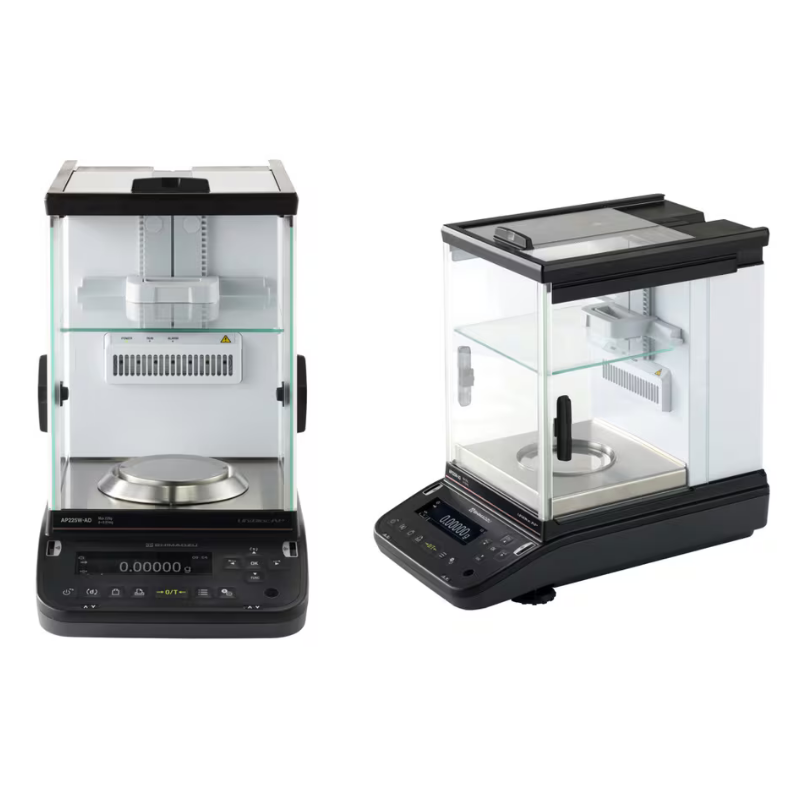
Analytical balances, AP124W
Shimadzu (Japan)
Analytical balances, AP124X
Shimadzu (Japan)
Analytical balances, AP124Y
Shimadzu (Japan)
Analytical balances, AP125WD
Shimadzu (Japan)
Analytical balances, AP125WD-AD
Shimadzu (Japan)
Analytical balances, AP135W
Shimadzu (Japan)
Analytical balances, AP135W-AD
Shimadzu (Japan)
Analytical balances, AP224W
Shimadzu (Japan)
Analytical balances, AP224W-AD
Shimadzu (Japan)
Analytical balances, AP224X
Shimadzu (Japan)
Analytical balances, AP224Y
Shimadzu (Japan)
Analytical balances, AP225W
Shimadzu (Japan)
Analytical balances, AP225W-AD
Shimadzu (Japan)
Analytical balances, AP225WD
Shimadzu (Japan)
Analytical balances, AP225WD-AD
Shimadzu (Japan)
What Are Laboratory Analyzers and Measuring Instruments?
Laboratory analyzers and measuring instruments are specialized devices used to investigate the composition, physicochemical properties, and quantitative characteristics of materials and specimens. These systems support scientific research, laboratory quality control, sample preparation, and verification of raw material and finished product properties.
This category includes biotechnology analyzers, Total Organic Carbon (TOC) analyzers, particle size analyzers, analytical balances, and moisture analyzers. Each group of instruments serves specific analytical purposes and relies on appropriate measurement techniques.
Main Types of Laboratory Analytical Equipment
Modern laboratory instruments provide information about a wide range of specimen characteristics, from molecular structures and organic carbon content to particle size distributions, mass, and mass loss during drying.
- Biotechnology analyzers — are used to investigate proteins, peptides, and other biological materials according to the analytical method employed. Protein sequencers, for example, determine amino acid sequences from the N-terminus using Edman degradation followed by chromatographic analysis of the reaction products.
- Total Organic Carbon (TOC) analyzers — quantitatively determine organic carbon in water and other compatible specimens. They are used for water quality control, process liquid testing, wastewater treatment monitoring, and the investigation of organic contamination. Depending on the system, catalytic combustion or chemical oxidation may be used, followed by measurement of the resulting carbon dioxide.
- Particle size analyzers — determine particle size distributions in powders, suspensions, and other dispersed systems. Depending on instrument design, measurement technologies may include laser diffraction or specialized nanoparticle analysis methods.
- Analytical balances and moisture analyzers — are used for precise sample weighing, solution preparation, and material mass measurement. Thermogravimetric moisture analyzers determine mass loss during heating and drying, which is interpreted according to specimen properties and the analytical method used.
Applications of Laboratory Analyzers and Measuring Instruments
Equipment in this category is used in research and production laboratories where specific parameters of materials, media, and industrial processes must be measured and monitored.
- Biotechnology and pharmaceuticals — protein and peptide characterization, water analysis, powder property assessment, and laboratory sample preparation.
- Environmental monitoring and water treatment — determination of total organic carbon in water, wastewater treatment monitoring, and process liquid testing.
- Chemical and food industries — examination of dispersed materials, particle size control, component weighing, and determination of mass loss during drying.
- Materials science and industrial manufacturing — particle size analysis of powders, raw material control, specimen preparation, and laboratory measurements.
- Research institutions — quantitative measurement, analytical method development, and material property investigation.
How to Choose a Laboratory Analyzer or Measuring Instrument
Equipment selection begins with identifying the parameter to be measured, specimen types, and analytical requirements. Biotechnology applications require careful consideration of the analytical method and target material. For TOC systems, important factors include concentration ranges and specimen characteristics, while particle size analysis requires evaluation of measurement range, operating principle, and dispersion preparation.
When selecting analytical balances, important specifications include maximum capacity, readability, repeatability, and calibration capabilities. Moisture analyzers should be evaluated according to heating conditions, drying endpoint criteria, and method suitability for the material.
Analytical throughput, automation, maintenance requirements, software functionality, and data storage capabilities are also important. Properly selected instruments support reproducible measurements and laboratory quality control according to specimen properties and research objectives.