
Organic Materials Analyzer
Instrument for determining the composition and properties of organic compounds in materials, plastics, lubricants, fuels and other samples.
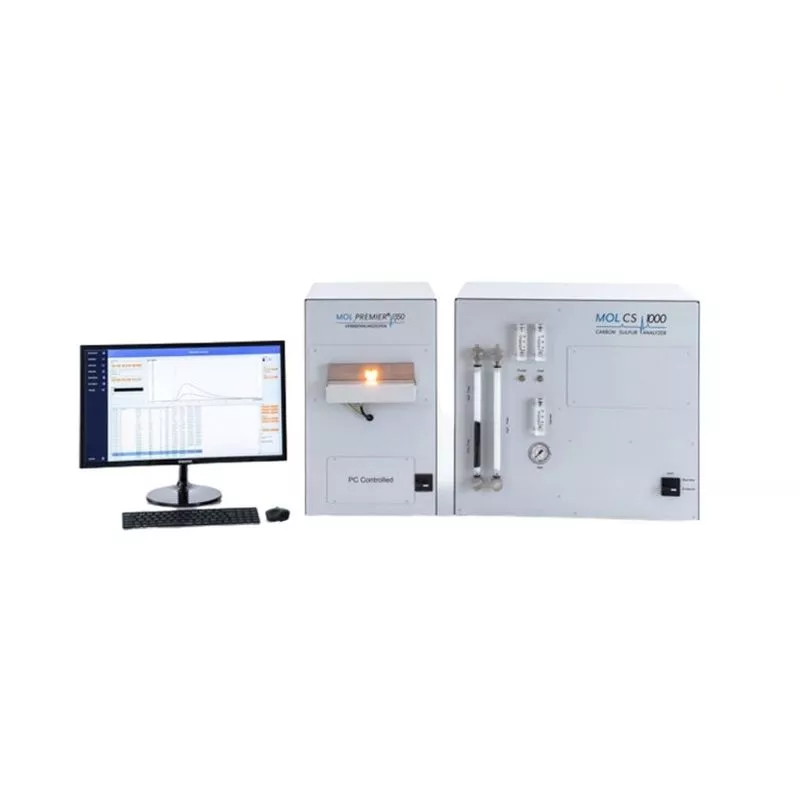
What Are Organic Material Analyzers?
Organic material analyzers are laboratory instruments designed for quantitative determination of carbon (C) and sulfur (S) in carbon-containing substances and materials. These instruments are used to examine coal, coke, wood, soils, waste, ash, and other organic or inorganic specimens compatible with the analytical method.
Determining carbon and sulfur concentrations is important for raw material characterization, fuel quality control, environmental studies, and verification of industrial material properties. These analyzers are used in research institutions, production laboratories, the energy sector, chemical industries, and quality control facilities.
Operating Principle and Analyzer Selection
These analyzers operate through high-temperature combustion of a specimen in a stream of oxygen. During analysis, carbon is converted primarily into carbon dioxide (CO₂), while sulfur forms sulfur dioxide (SO₂). The resulting gaseous compounds are transferred to infrared detectors, including NDIR detectors, which enable quantitative determination of the corresponding elements in the material.
When selecting an analyzer, important factors include specimen types, carbon and sulfur measurement ranges, detection limits, furnace characteristics, sample preparation requirements, and calibration capabilities. Reproducible results require appropriate certified reference materials and compliance with established analytical procedures.