
Total Organic Carbon (TOC) Analyzers
Instruments for measuring total organic carbon in water, solutions, and process liquids.
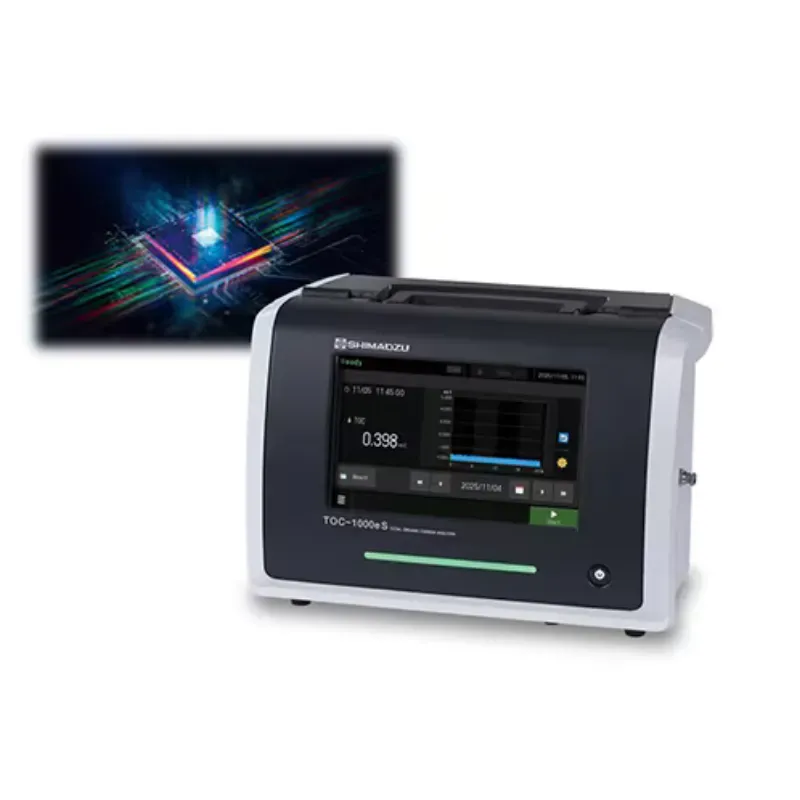
Total organic carbon analyzer (TOC analyzer), TOC-1000e
Shimadzu (Japan)
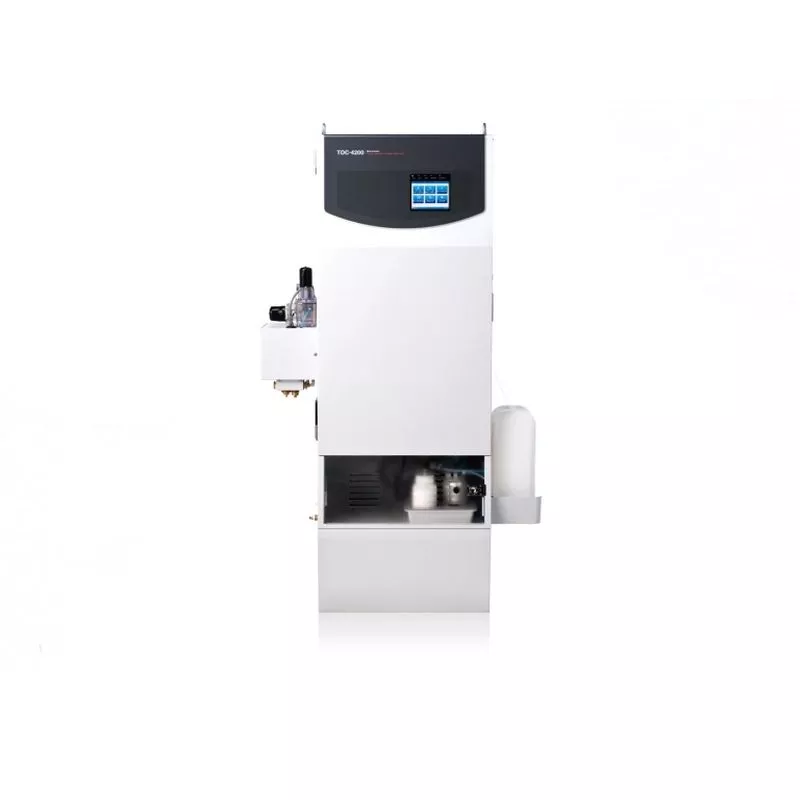
Total organic carbon analyzer (TOC analyzer), TOC-4200
Shimadzu (Japan)
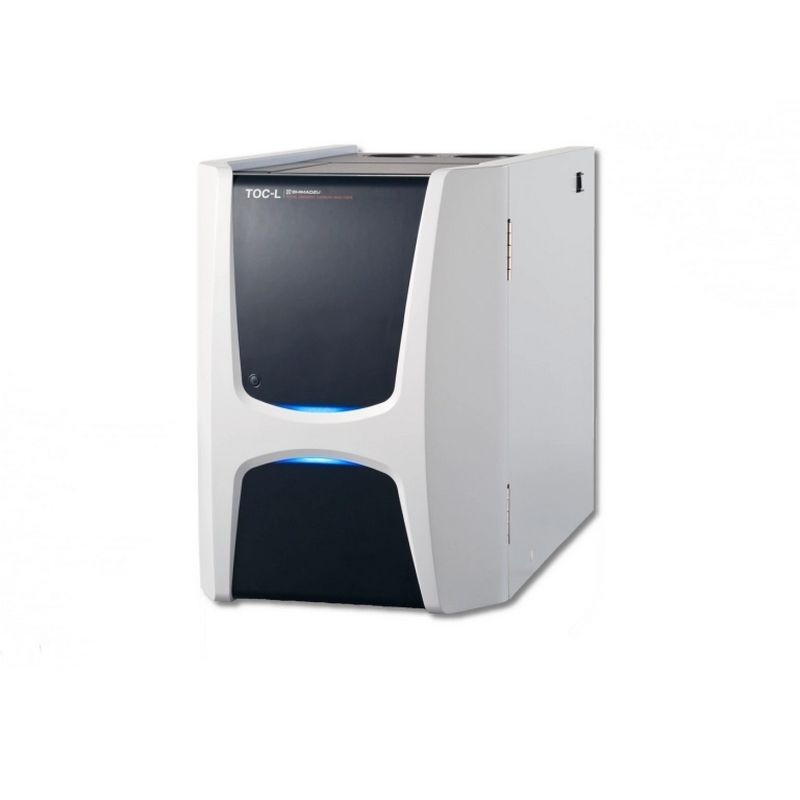
Total organic carbon analyzer (TOC analyzer), TOC-L CPH
Shimadzu (Japan)
Total organic carbon analyzer (TOC analyzer), TOC-L CPN
Shimadzu (Japan)
Total organic carbon analyzer (TOC analyzer), TOC-L CSH
Shimadzu (Japan)
Total organic carbon analyzer (TOC analyzer), TOC-L CSN
Shimadzu (Japan)
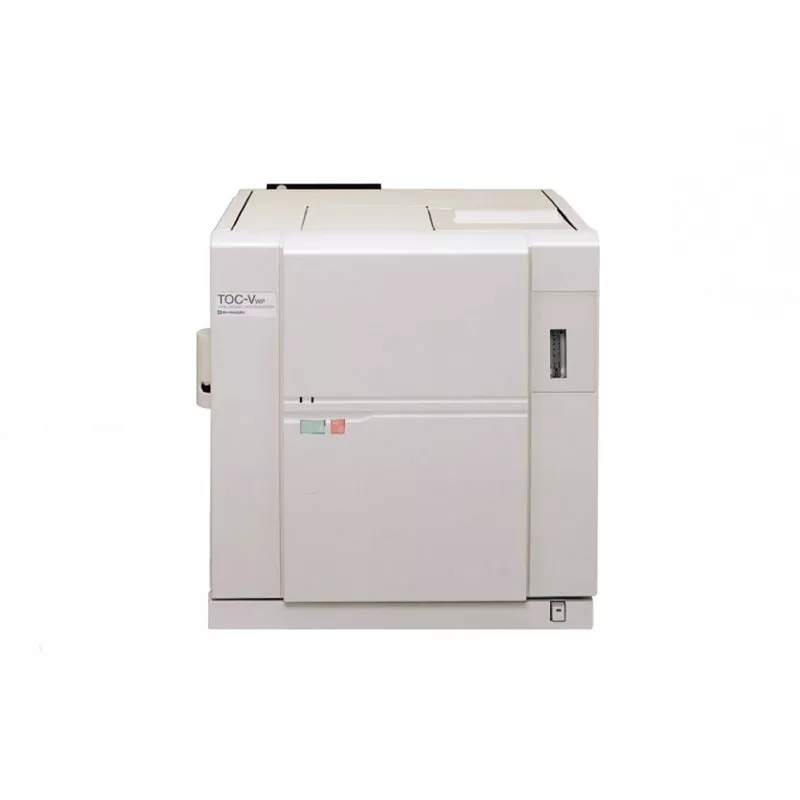
Total organic carbon analyzer (TOC analyzer), TOC-V WP
Shimadzu (Japan)
Total organic carbon analyzer (TOC analyzer), TOC-V WS
Shimadzu (Japan)
What Is a Total Organic Carbon (TOC) Analyzer?
Total Organic Carbon (TOC) analyzers are analytical laboratory instruments designed for quantitative determination of organic carbon in water, aqueous solutions, and other compatible specimens. TOC is used to assess organic contamination, monitor water quality, and investigate changes in water composition during industrial processes.
TOC analyzers are used to examine drinking water, purified water, process water, wastewater, and other liquid media according to instrument capabilities. They are applied in pharmaceuticals, energy production, chemical and food manufacturing, wastewater treatment facilities, and environmental laboratories. Total organic carbon measurement provides information about the combined carbon content of organic compounds but does not directly identify their individual chemical composition.
Operating Principle and TOC Determination Methods
TOC analysis is based on converting carbon contained in a specimen into carbon dioxide (CO₂), followed by quantitative measurement of the resulting gas. Non-Dispersive Infrared (NDIR) detectors are widely used for this purpose. Depending on instrument design, different methods are applied to oxidize organic substances:
- High-temperature catalytic combustion oxidation — the specimen is heated in the presence of a catalyst, converting organic compounds into CO₂. This technique is suitable for a wide range of concentrations and can be applied to aqueous specimens containing difficult-to-oxidize or particulate organic components, subject to analytical method requirements.
- Wet chemical oxidation — organic carbon is oxidized using reagents such as persulfates, assisted by ultraviolet radiation and/or heating. This method is used, among other applications, for determining low concentrations of organic carbon in suitable liquid specimens.
Several analytical parameters must be distinguished in TOC analysis:
- TC (Total Carbon) — total carbon, including both organic and inorganic components.
- IC (Inorganic Carbon) — inorganic carbon, including carbonates and bicarbonates.
- TOC (Total Organic Carbon) — total organic carbon, which can be determined as the difference between TC and IC.
- NPOC (Non-Purgeable Organic Carbon) — organic carbon remaining in the specimen after acidification and sparging to remove inorganic carbon.
When necessary, Purgeable Organic Carbon (POC), which may be lost during preliminary sparging, can be determined separately. Consequently, the choice between direct NPOC measurement and other TOC calculation approaches depends on specimen composition and analytical method requirements.
Laboratory and Online TOC Analyzers
According to their application, total organic carbon analyzers are divided into laboratory and online systems. Laboratory TOC analyzers are used to investigate collected water samples, establish calibration relationships, and perform routine series of measurements. Depending on the model, they may include autosamplers, automatic dilution systems, data processing software, and additional analytical modules.
Online TOC analyzers are designed for automatic periodic sampling and measurement directly from process streams. These systems enable monitoring of organic carbon concentration changes, supervision of water treatment and wastewater purification processes, recording of analytical results, and transmission of signals to industrial control systems when appropriate interfaces are provided.
Some TOC systems additionally support Total Nitrogen (TN) determination or solid sample analysis. However, these capabilities require suitable modules and are not standard features of every instrument configuration.
Applications and Selection of Total Organic Carbon Analyzers
TOC analyzers are used in pharmaceutical manufacturing to monitor purified water and water for injection according to applicable regulatory methods, in power generation to assess process water quality, and in chemical and food industries to monitor liquid media. Environmental laboratories and wastewater treatment facilities use TOC measurements to evaluate organic contamination and treatment efficiency.
When selecting equipment, important factors include organic carbon concentration range, detection limits, specimen types, suspended particle content, salt and inorganic carbon concentrations, and required measurement frequency. High sensitivity is essential for ultrapure water analysis, while wastewater and complex matrices require consideration of oxidation efficiency and the instrument's ability to handle challenging specimen compositions.
Additional selection criteria include automation, calibration capabilities, software-based data archiving, integration with laboratory or industrial systems, and compatibility with applicable analytical procedures. A properly selected TOC analyzer supports reproducible organic carbon measurements according to laboratory testing and process monitoring requirements.