
Energy Dispersive X-ray Fluorescence Spectrometers
Compact energy-dispersive XRF spectrometers for rapid elemental analysis of metals, alloys, powders, and coatings.
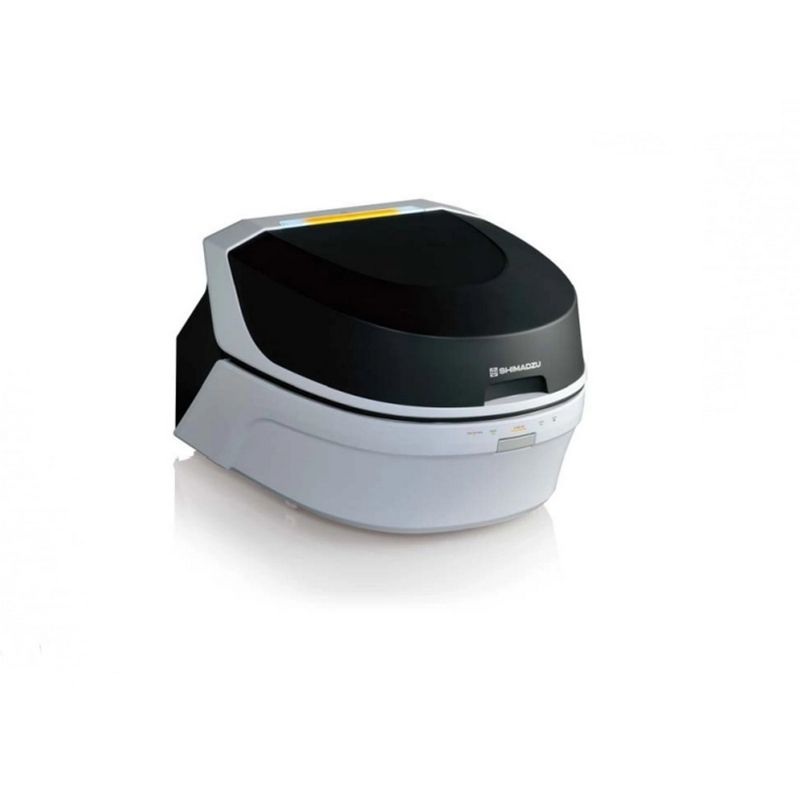
Energy dispersive x-ray fluorescence spectrometer, EDX-7000
Shimadzu (Japan)
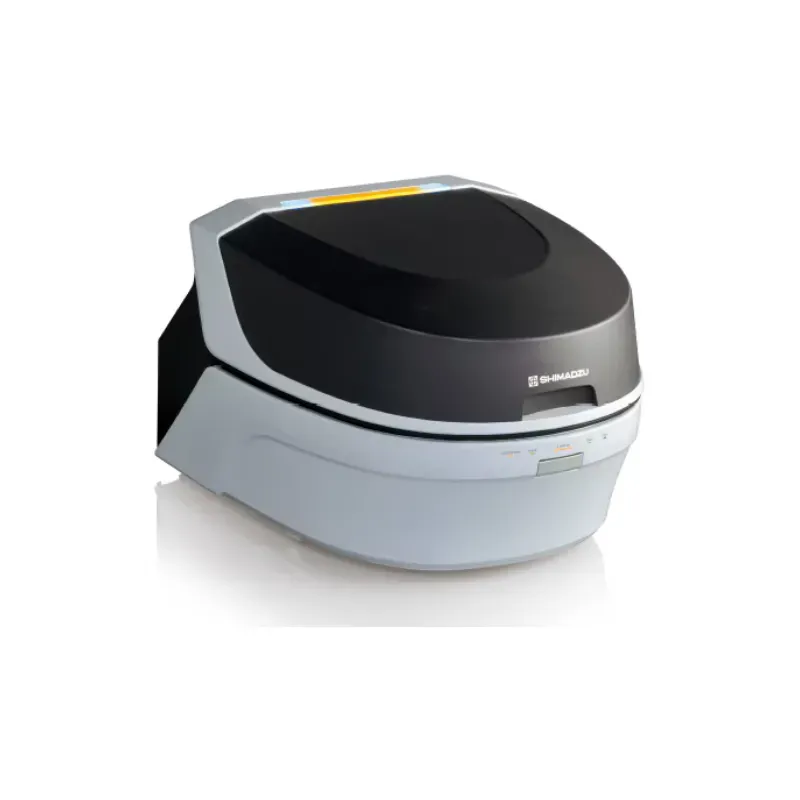
Energy dispersive X-ray fluorescence spectrometer, EDX-7200
Shimadzu (Japan)
Energy dispersive x-ray fluorescence spectrometer, EDX-8000
Shimadzu (Japan)
Energy dispersive x-ray fluorescence spectrometer, EDX-8100
Shimadzu (Japan)
What Is an Energy Dispersive X-ray Fluorescence Spectrometer?
Energy Dispersive X-ray Fluorescence spectrometers (EDXRF) are analytical laboratory instruments designed for qualitative and quantitative determination of elemental composition. The method is based on detecting characteristic X-ray radiation emitted when a specimen is exposed to primary X-rays.
The main feature of EDXRF is its ability to register spectral signals from multiple chemical elements during a single measurement. This makes these spectrometers suitable for rapid analysis of metals, alloys, powders, ores, polymers, and other materials. Depending on the instrument configuration, solid, powdered, and liquid specimens, as well as certain coatings and thin films, can be examined.
Operating Principle and Analytical Capabilities of EDXRF
During measurement, an X-ray tube irradiates the specimen, exciting atoms and causing them to emit characteristic X-ray photons. Photon energies depend on the chemical elements present, while recorded signal intensities are used to determine their concentrations. Modern EDXRF systems may incorporate semiconductor Silicon Drift Detectors (SDD), which register X-ray spectra by resolving the energies of individual photons.
The main analytical capabilities of energy dispersive spectrometers include:
- Qualitative and quantitative elemental analysis — identification of chemical elements and determination of their concentrations in examined materials.
- Rapid multielement analysis — acquisition of spectral lines from multiple elements within a single measurement cycle.
- Impurity determination — monitoring selected elements in raw materials and finished products within the instrument's detection capabilities.
- Coating and thin-film analysis — determination of elemental composition and, with suitable analytical methods, estimation of coating thickness.
- Automated data processing — application of calibration curves, fundamental parameter methods, and algorithms for matrix-effect correction.
Compared with Wavelength Dispersive X-ray Fluorescence (WDXRF) spectrometers, energy dispersive systems use a different spectral detection principle and often feature a simpler X-ray optical design. However, WDXRF generally provides higher spectral resolution, which can be important for separating closely spaced spectral lines.
Applications of Energy Dispersive X-ray Fluorescence Spectrometers
EDXRF spectrometers are used in scientific and industrial laboratories for rapid determination of elemental composition, raw material inspection, and finished product quality control.
- Metallurgy and mechanical engineering — analysis of metals, alloys, solders, coatings, and industrial materials.
- Geology and mining — determination of elemental composition in ores, minerals, rocks, and powdered specimens.
- Electronics and electrical engineering — elemental inspection of components, coatings, and materials, including screening for selected substances restricted by regulations.
- Chemical industry — examination of raw materials, polymers, catalysts, and other industrial substances.
- Environmental and scientific research — elemental analysis of soils, sediments, waste, and prepared laboratory specimens.
How to Choose an Energy Dispersive X-ray Fluorescence Spectrometer
When selecting an EDXRF spectrometer, important considerations include specimen types, target elements, expected concentration ranges, required detection limits, and analytical throughput. Particular attention should be paid to light-element detection because it depends on detector characteristics, X-ray optics, and the measurement atmosphere. Certain applications may require vacuum operation or helium purging.
Other important specifications include sample chamber dimensions, irradiation spot size, available primary filters, automated sample handling, and software for quantitative analysis. When analyzing powders, liquids, and heterogeneous materials, specimen preparation requirements and matrix effects must also be considered.
A properly selected EDXRF spectrometer supports efficient multielement analysis with sensitivity, accuracy, and speed suited to laboratory testing and industrial quality control requirements.