
Simultaneous Thermal Analyzers
Combined instruments that simultaneously perform thermogravimetric analysis (TGA) and differential scanning calorimetry (DSC) for comprehensive assessment of thermal behavior of materials.
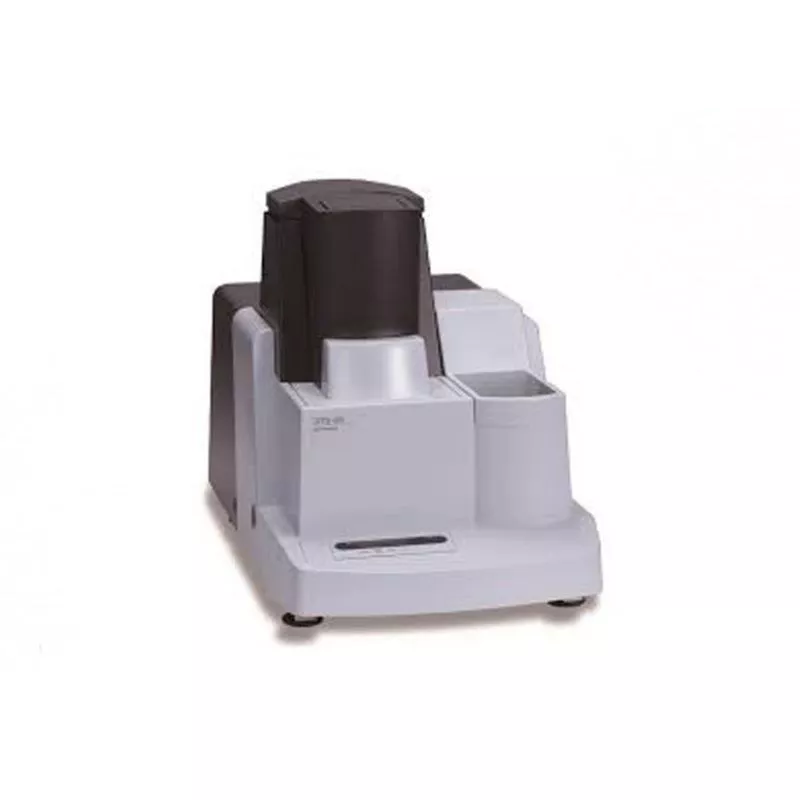
What Are Simultaneous Thermal Analyzers?
Simultaneous Thermal Analyzers are laboratory instruments designed to measure sample mass changes and thermal effects at the same time under a controlled temperature program. Simultaneous Thermal Analysis (STA) provides complementary information about the same specimen under identical temperature, atmosphere, and heating conditions.
In TG-DTA systems, Thermogravimetry (TG or TGA) is combined with Differential Thermal Analysis (DTA). Thermogravimetry records changes in sample mass as a function of temperature or time, while DTA measures the temperature difference between the specimen and a reference material. Evaluating these signals together helps investigate thermal decomposition, oxidation, dehydration, phase transitions, and other physical or chemical processes.
Simultaneous thermal analyzers are used in chemical and polymer manufacturing, pharmaceuticals, metallurgy, ceramics, composites, electronics, and materials research laboratories. They support the evaluation of raw materials, intermediate products, and finished goods, as well as manufacturing process control and comparative material studies.
Thermogravimetric Analysis (TG, TGA)
Thermogravimetric Analysis measures changes in specimen mass during heating, cooling, or isothermal holding under controlled conditions. The material is placed in a suitable crucible connected to a sensitive balance system. Mass changes associated with physical and chemical processes are recorded throughout the temperature program.
Typical thermogravimetric applications include:
- Moisture and volatile loss — determining temperature intervals associated with evaporation or release of volatile substances.
- Thermal decomposition — investigating degradation stages of polymers, organic compounds, and other materials involving mass changes.
- Oxidation — examining processes that may cause mass gains or losses as materials interact with reactive atmospheres.
- Dehydration and decarbonation — recording the release of water or gaseous products during thermal reactions of inorganic compounds.
- Residual mass — determining the amount of material remaining after the specified temperature program.
- Mixture characterization — estimating volatile content, organic components, fillers, and ash residue using appropriate procedures.
The primary result is a TG curve showing sample mass or relative mass as a function of temperature or time. A DTG curve, representing the derivative of the thermogravimetric signal, may also be calculated to display the rate of mass change and help identify temperatures of maximum reaction activity.
Thermogravimetry does not directly identify the chemical nature of substances. Similar mass losses can result from different processes, and additional techniques such as infrared spectroscopy or mass spectrometry may be required for compound identification.
Differential Thermal Analysis (DTA) and Curve Interpretation
Differential Thermal Analysis (DTA) measures the temperature difference between a sample and reference material while both follow the same programmed heating or cooling conditions. When the sample undergoes a process involving heat absorption or release, its thermal response differs from the reference and produces a characteristic DTA signal.
DTA can reveal endothermic and exothermic events, including melting, crystallization, certain phase transformations, oxidation, and decomposition reactions. Unlike Differential Scanning Calorimetry (DSC), however, the DTA signal represents a temperature difference rather than direct differential heat-flow measurement.
The advantage of simultaneous TG-DTA testing is the ability to correlate thermal effects with mass changes in the same specimen. For example, an endothermic event without significant mass change may be associated with melting or a phase transition. A thermal event accompanied by mass loss may indicate evaporation, dehydration, or decomposition.
Three signals can be evaluated together:
- TG — sample mass change versus temperature or time.
- DTG — rate of mass change derived from the TG signal.
- DTA — temperature difference between the specimen and reference material.
Combined interpretation helps distinguish consecutive and partially overlapping thermal processes. Reliable identification of individual reactions still requires consideration of material composition, atmosphere, heating rate, and other experimental conditions.
Shimadzu DTG-60, DTG-60A, DTG-60H, and DTG-60AH
The Shimadzu DTG-60, DTG-60A, DTG-60H, and DTG-60AH are simultaneous thermal analyzers designed for combined thermogravimetric and differential thermal measurements.
These instruments use a top-loading balance based on a parallel-action Roberval mechanism. This design reduces changes in balance sensitivity caused by shifts in the sample's center of gravity during melting or thermal expansion. The mass measurement system provides a readability of 0.1 µg.
All four models feature a TG measurement range of ±500 mg and a DTA signal range of ±1000 µV. The maximum combined mass of specimen and crucible is 1 g. Measurements can be performed in air or a suitable inert gas atmosphere.
The models differ in maximum operating temperature and sample handling:
- Shimadzu DTG-60 — a standard simultaneous thermal analyzer operating from ambient temperature to 1100 °C with manual sample loading.
- Shimadzu DTG-60A — provides the same maximum temperature of 1100 °C and includes an autosampler with capacity for up to 24 samples.
- Shimadzu DTG-60H — a high-temperature model operating from ambient temperature to 1500 °C with manual sample loading.
- Shimadzu DTG-60AH — combines the 1500 °C high-temperature range with automatic handling of up to 24 samples.
Therefore, the principal difference between the DTG-60 and DTG-60H is the upper temperature limit, while the DTG-60A and DTG-60AH additionally provide automated sample handling for repeated laboratory measurements.
The series supports programmed measurement cycles, thermal curve processing, and report generation using Shimadzu software. Additional gas control systems and analytical interfaces may be available depending on configuration.
Gas Atmosphere, Sample Preparation, and Measurement Quality
Simultaneous thermal analysis results are strongly influenced by specimen preparation and experimental conditions. Reliable interpretation requires control of sample mass and uniformity, crucible type, temperature program, atmosphere, and heating rate.
Gas atmosphere has a significant effect on thermal behavior. Inert environments can be used to investigate decomposition while limiting oxidation, whereas air or other suitable reactive gases may promote oxidation and additional chemical reactions. Comparing results obtained under different atmospheres can provide information about thermal reaction mechanisms.
Sample mass and crucible selection influence heat transfer, measurement sensitivity, and reaction behavior. Powders, granules, polymers, and other materials require appropriate sample quantities and specimen preparation. Crucible materials must be compatible with both the substance and the test temperature.
Heating rate can affect observed decomposition onset temperatures, DTG peak positions, and DTA peak shapes. Higher rates may introduce thermal gradients and kinetic shifts, making consistent measurement conditions essential for meaningful comparisons.
More advanced investigations may involve Evolved Gas Analysis (EGA). When combined with an appropriate infrared spectroscopic system, TG-FTIR provides information about gaseous products released during heating. Such measurements require additional analytical instrumentation and an appropriate interface; gas identification is not an inherent function of a standard TG-DTA analyzer.
ISO 11358-1:2022 defines general principles of thermogravimetric analysis of polymers, including dynamic and isothermal measurements. ASTM E1131 covers compositional analysis by thermogravimetry, while ASTM E2550 describes assessment of thermal stability. Suitability for a particular method depends on instrument configuration, calibration, and experimental conditions.
Industrial Applications of Simultaneous Thermal Analyzers
Simultaneous TG-DTA testing is used to investigate materials in which heating produces mass changes, thermal events, or a combination of these phenomena.
- Polymer manufacturing — analysis of thermal decomposition of plastics, elastomers, composites, organic fillers, and residual mass.
- Chemical industry — investigation of reagents, catalysts, organic and inorganic compounds, and synthesis products.
- Pharmaceutical industry — evaluation of moisture loss, volatile compounds, thermal decomposition of active substances, and excipient behavior.
- Metallurgy — investigation of oxidation of metals and alloys, thermal reactions, and high-temperature mass changes.
- Ceramics manufacturing — monitoring binder removal, dehydration, raw material decomposition, and high-temperature transformations.
- Composite materials — assessment of polymer matrix degradation, residual mass, and selected constituent fractions using appropriate methods.
- Energy and fuel industries — analysis of fuels, biomass, carbon materials, volatile matter, and ash residues.
- Research laboratories — investigation of thermal process kinetics, comparative materials studies, and development of thermal analysis procedures.
TG-DTA measurements characterize material behavior under defined laboratory conditions, but a single thermal analysis experiment does not necessarily establish long-term stability, product service life, or a safe operating temperature without additional evidence.
How to Choose a Simultaneous Thermal Analyzer
Instrument selection should begin with material type, expected reaction temperatures, required mass measurement range, gas atmosphere conditions, and the number of specimens to be processed.
For measurements up to 1100 °C, the Shimadzu DTG-60 or DTG-60A may be suitable. High-temperature studies involving ceramics, selected metals, or inorganic materials may require the DTG-60H or DTG-60AH with an upper temperature limit of 1500 °C.
Autosampler-equipped versions are useful for laboratories performing large numbers of similar tests. Where understanding decomposition mechanisms and identifying evolved gases are priorities, compatibility with additional spectroscopic instrumentation should also be considered.
Other important selection criteria include balance sensitivity and stability, heating rates, supported atmospheres, crucible compatibility, software functions, calibration procedures, and laboratory gas supply and ventilation requirements.
A properly selected simultaneous thermal analyzer provides reproducible TG-DTA data and supports comprehensive material characterization in industrial and research laboratories.