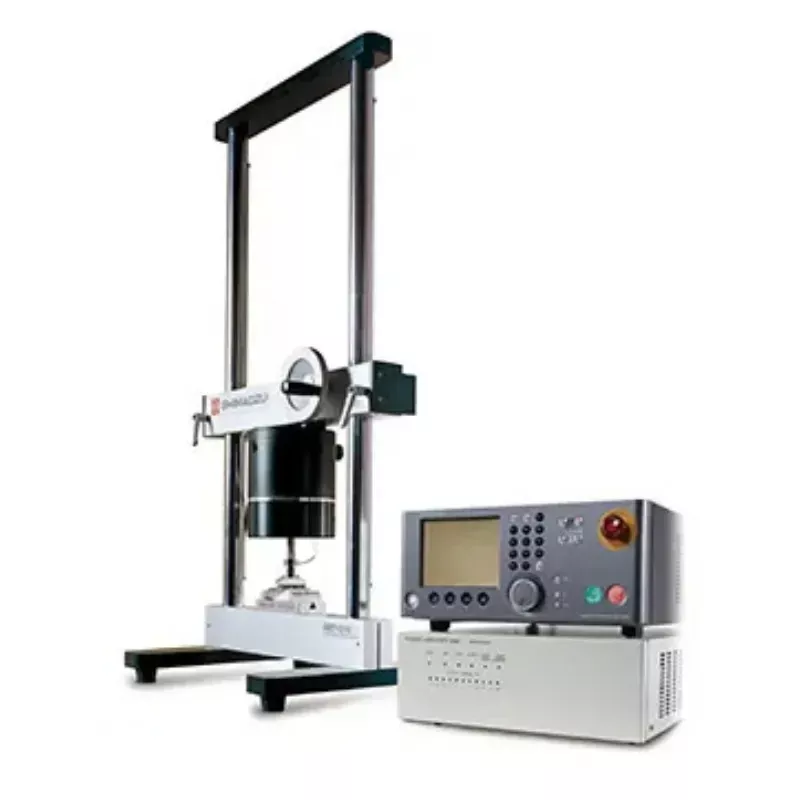
Description
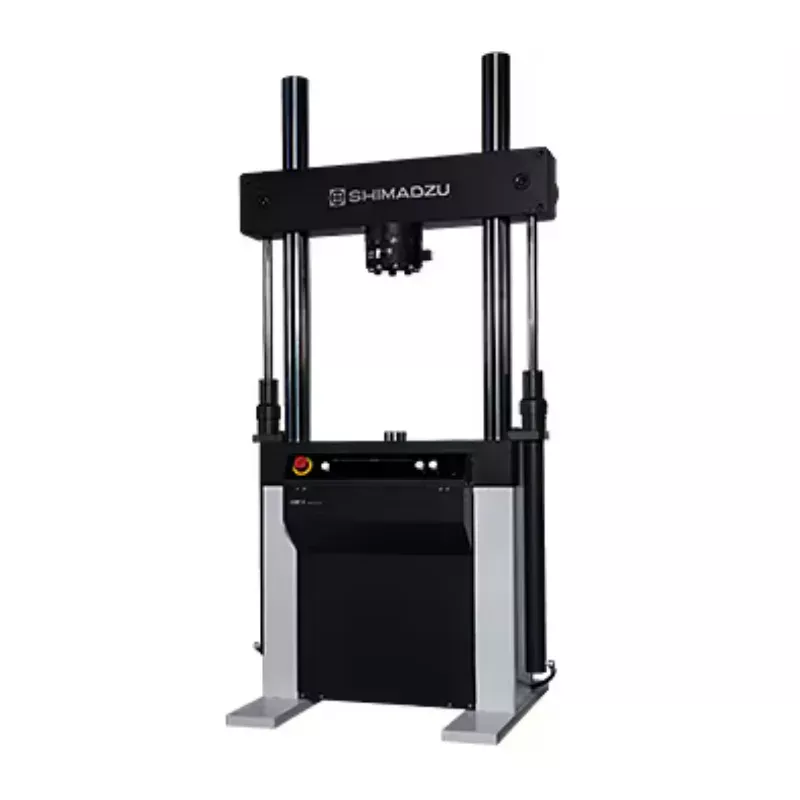
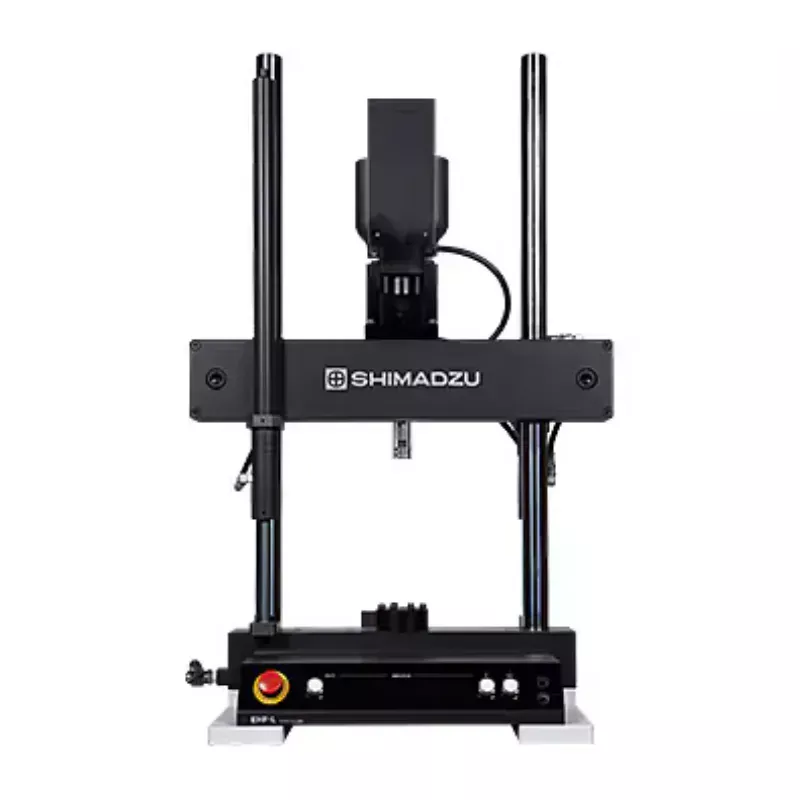
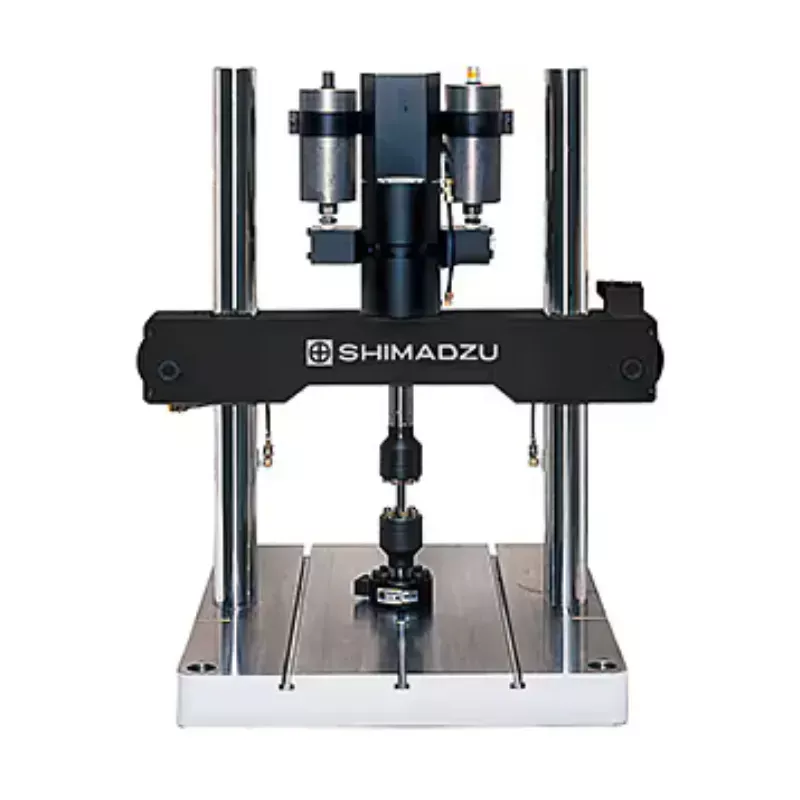
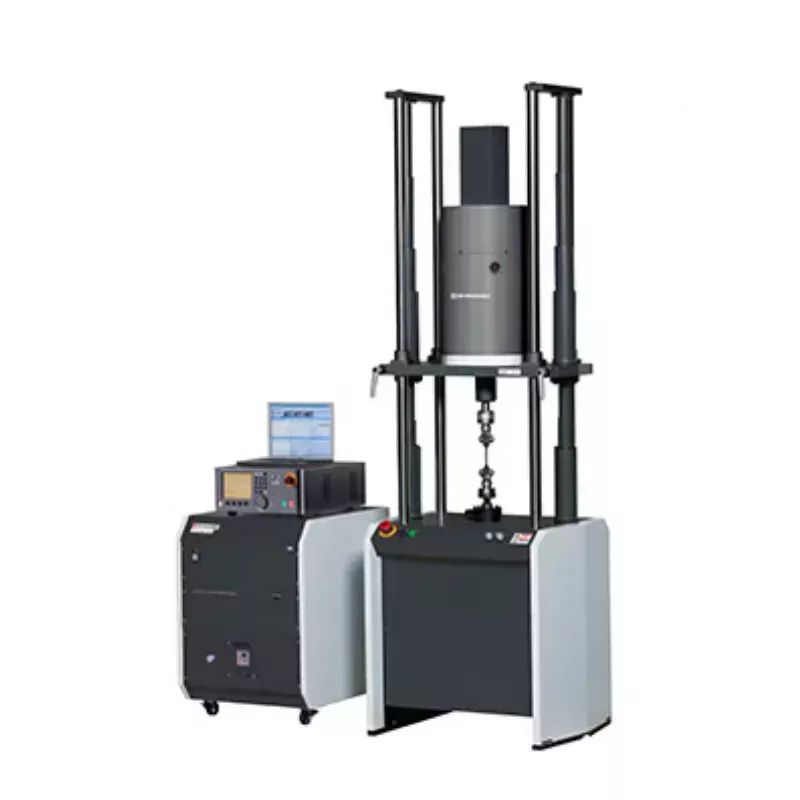
The Shimadzu USF-2000A ultrasonic fatigue testing system is designed for accelerated investigation of fatigue life in metallic materials at very high cycle counts (VHCF). A piezoelectric transducer and resonant horn produce longitudinal oscillations at approximately 20 kHz, allowing tests to 10⁹ cycles in about 14 hours rather than many weeks.
The system requires specimens whose geometry and material properties enable resonance near 20 kHz. Horn-tip displacement amplitude ranges from ±10 to ±50 µm, while actual specimen stress depends on geometry and material properties. The method is particularly useful for high-strength steels, aluminum and titanium alloys, and fatigue-fracture investigations.
Features
- Ultrasonic resonant loading at approximately 20 kHz.
- Accelerated testing in the gigacycle fatigue regime.
- Horn-tip displacement amplitude of ±10 to ±50 µm.
- Stress control based on vibration amplitude and specimen geometry.
- Specimen cooling and temperature monitoring for extended tests.
- Specimens must support resonance at the required frequency; highly self-heating materials may be unsuitable.