Description
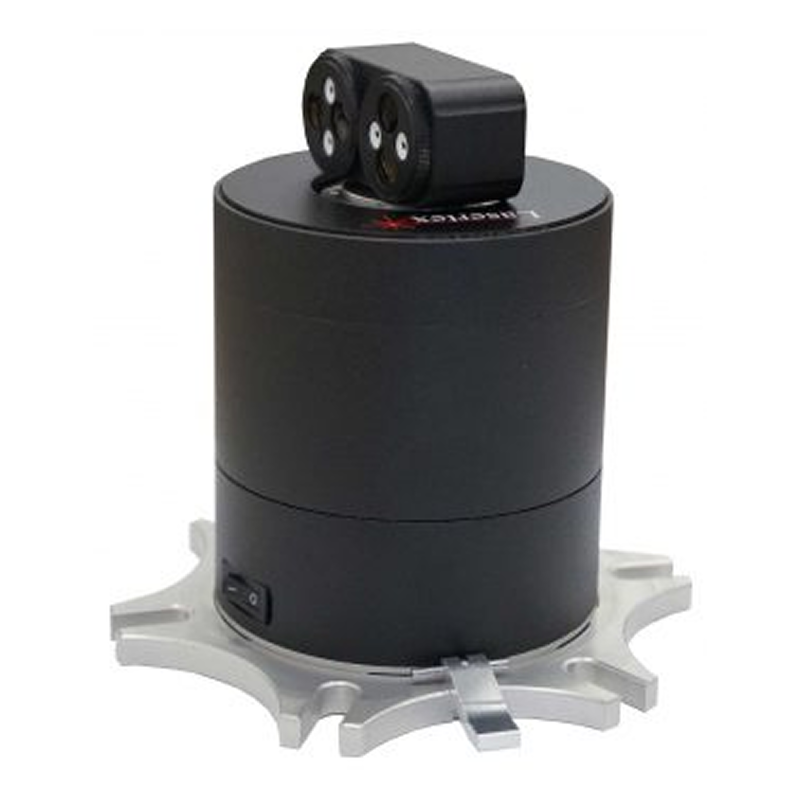
HPI-3D is a high-precision laser interferometric system designed for measuring linear displacement, vibrations, angles, and machine geometry, as well as for calibrating CNC machines, CMMs, and measurement systems. It is the result of more than 20 years of experience in laser interferometer development and combines high performance, versatility, ease of use, and a compact design.
The system is suitable for use in production environments, mechanical engineering, maintenance operations, and laboratories. Thanks to wireless connectivity, a wide range of optical components, and compatibility with PC, tablet, or smartphone operation, HPI-3D provides maximum flexibility in real-world applications.
Key parameters
- Hardware resolution: 100 pm.
- Vibration measurement: up to 100 kHz (up to 50 kHz in the standard configuration).
- Dynamic measurements: up to 100,000 samples/s.
- Maximum measurable speed: up to ±7 m/s.
- Automatic environmental compensation with high update frequency.
- Compact design and supply in a durable portable case.
Main capabilities
- Positioning and calibration of CNC machines and coordinate measuring machines (CMM).
- Measurement of flatness, straightness, axis parallelism, and angular positioning.
- Measurement of vibrations, squareness, small angles, and dynamic motion.
- 3D machine geometry evaluation and fast machine accuracy inspection.
- Encoder accuracy inspection and machine maintenance applications.
- Dynamic measurements with internal or external stroboscope.
Features and equipment
- User-friendly software with free updates.
- Wireless connectivity and support for wireless sensors.
- Easy alignment and beam positioning system.
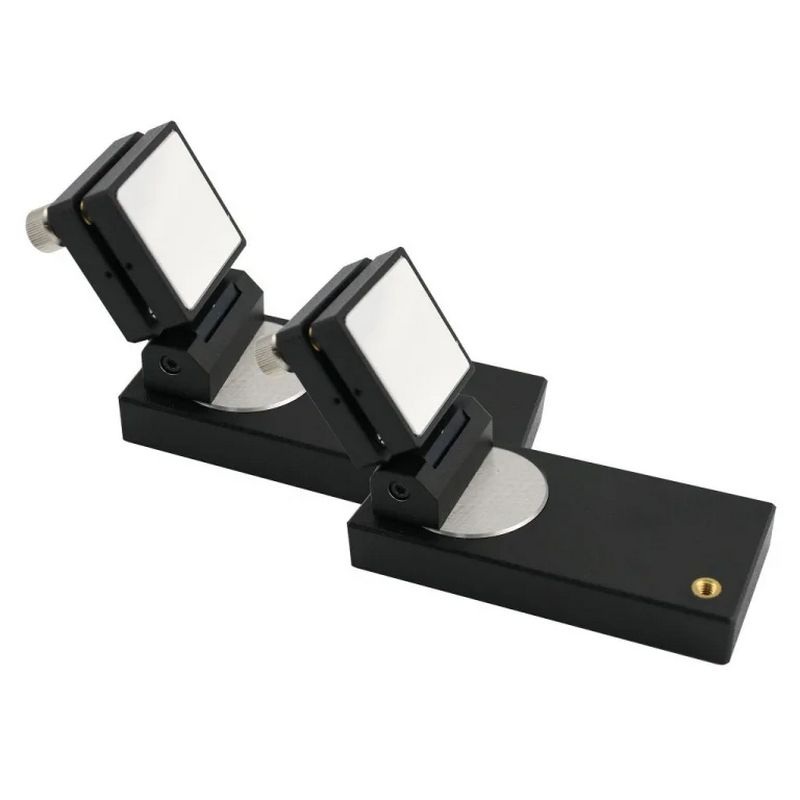
- Wide range of optical components for various applications.
- Configurable encoder output and open communication protocol.
- User-configurable input/output interface.
- Electronic spirit level option.
Advantages
- High accuracy and repeatability: ensures reliable positioning verification and encoder calibration, reducing errors and scrap rates.
- Early wear diagnostics: helps detect deviations and machine wear before they develop into serious failures.
- Higher production efficiency: improved positioning accuracy reduces waste, defects, and manufacturing costs.
- Wide versatility: suitable for measuring both very long and extremely small displacements, as well as full machine geometry.
- Fast setup and ease of use: the compact system with wireless connection and intuitive software significantly reduces preparation time.
- Advantage over mechanical methods: the absence of wear-prone mechanical parts enables stable, fast, and highly accurate measurements.